


What Is the 2026 Best Screw Centrifuge for Global Buyers?

What Is the 2026 Best Screw Centrifuge for Global Buyers?

Choosing the 2026 best Screw Centrifuge requires more than comparing catalogue capacity. Global buyers face stricter discharge limits, rising energy costs, and unstable sludge characteristics. A machine that performs well in Germany may struggle with abrasive sand, tropical humidity, or limited maintenance support elsewhere.

The evidence points toward careful, application-based selection. The UN World Water Development Report 2024 highlights growing pressure on freshwater resources and wastewater management. Its findings strengthen the case for efficient solids separation and higher water recovery. Reports from Grand View Research and MarketsandMarkets also indicate continued expansion in industrial centrifuge and wastewater treatment equipment. However, market forecasts differ by methodology. Treat them as direction, not proof.

Real operating data matters more.

An experienced buyer should examine feed solids, particle size, polymer demand, torque, noise, power consumption, and cake dryness. A 1,000-millimeter bowl may appear impressive, yet an undersized drive can reduce reliability under heavy loading. Energy performance deserves close attention. The U.S. Department of Energy consistently identifies motor systems as major industrial energy users, making drive efficiency commercially important. Safety and documentation matter too. ISO 12100 principles, guarding, emergency stopping, and service access should be verified before purchase.

The best Screw Centrifuge in 2026 will therefore depend on duty conditions, not marketing language. Supplier references, factory testing, spare-parts availability, and local technicians can reveal more than a polished brochure. This approach is not perfect. Laboratory results may not represent a full-scale plant. Still, transparent testing and honest performance limits create a more reliable buying decision for global projects.
What Is the 2026 Best Screw Centrifuge for Global Buyers?

What Is a Screw Centrifuge and How Does It Work?

For global buyers in 2026, understanding a screw centrifuge matters more than choosing a fashionable specification. A screw centrifuge, often called a decanter centrifuge, separates solids from liquids through continuous rotation. It commonly handles wastewater sludge, mineral suspensions, food residues, and industrial process mixtures.

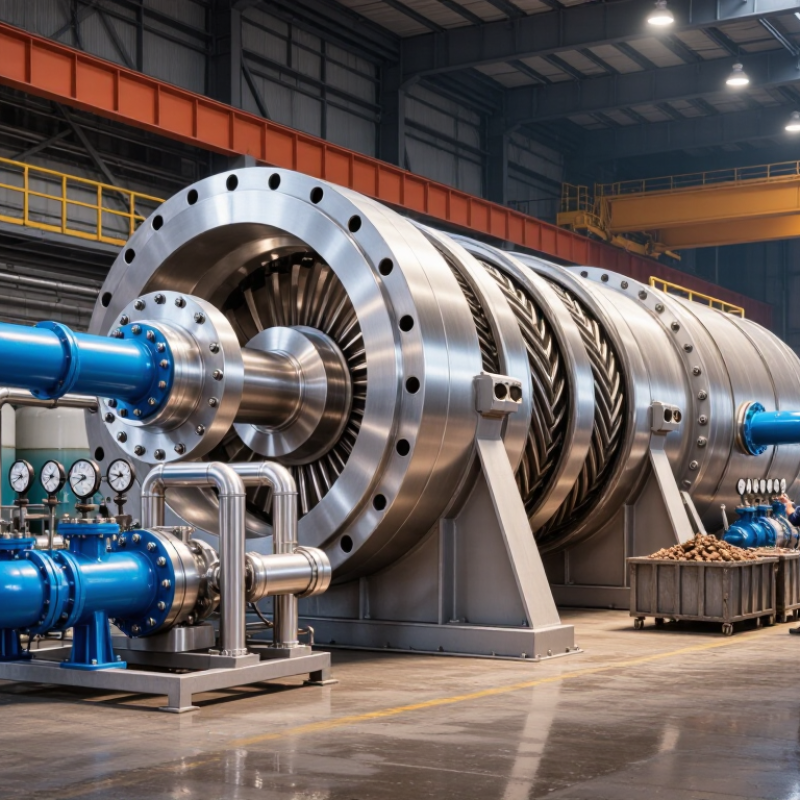
Inside the machine, a bowl spins at high speed. Centrifugal force pushes heavier particles toward the bowl wall. A slowly rotating screw conveyor moves the settled solids toward the conical discharge end. Clarified liquid travels in the opposite direction and leaves through adjustable outlets. This differential speed controls residence time, cake dryness, and solids recovery. Small changes matter.

Feed consistency changes everything. A unit tested with steady laboratory sludge may perform differently in a cold plant. I have seen operators focus on motor power while overlooking polymer preparation, vibration, or wear protection. That is a practical mistake. Buyers should request real feed trials, torque data, noise limits, and cleaning procedures. They should also check wetted materials and maintenance access.

It is not universal.

A reliable selection considers flow rate, particle size, moisture targets, temperature, corrosion risk, and local service capability. Automatic controls can stabilize operation, but they cannot repair poor feed preparation. Even experienced engineers can misjudge performance when seasonal solids vary. Verification should continue after installation through cake analysis, vibration checks, and operating records.

Which Features Define the Best Screw Centrifuge in 2026?

What Is the 2026 Best Screw Centrifuge for Global Buyers?

Which Features Define the Best Screw Centrifuge in 2026?

The best screw centrifuge is defined by measurable performance, not polished brochures. UN-Water’s 2024 update reports that only 56% of domestic wastewater was safely treated globally in 2022. This makes reliable dewatering a practical infrastructure need. Buyers should examine cake dryness, solids capture, throughput, and polymer consumption under real feed conditions. A variable differential-speed system helps operators respond to changing sludge texture. Automatic torque control can reduce blockages during sudden load increases. Small details matter.

Energy performance deserves equal attention. The International Energy Agency’s Energy Efficiency 2023 report identifies industry as using about 37% of global final energy. Therefore, buyers should request specific energy data, such as kilowatt-hours per tonne of dry solids. A sealed design, efficient drive, abrasion-resistant scroll, and simple wash system can reduce operating burdens. Remote monitoring is useful, but it cannot replace local maintenance skills. That point is often ignored.

Tips: Ask for a witnessed site test using similar sludge. Compare results at the same solids concentration. Check spare-part availability, service response, noise levels, and cleaning time. Request five-year operating estimates, not only purchase prices. Be cautious with impressive laboratory figures; field conditions are less forgiving. A quieter machine may still perform poorly if its torque margin is too small. According to experience, the “best” choice is sometimes the less powerful unit with clearer data and easier maintenance.

How Should Global Buyers Compare Screw Centrifuge Performance?

The 2026 best screw centrifuge depends on the buyer’s process, not on one universal specification. Global buyers should compare real test results using similar feed conditions. Check solids throughput, separation efficiency, cake dryness, centrate clarity, and power consumption. A machine producing dry cake may still perform poorly if it loses fine particles in the liquid stream. Ask for data from comparable materials, not only clean laboratory samples.

In field evaluations, I examine torque stability during feed changes. Stable torque usually supports safer, smoother operation. I also check differential speed control, wear protection, noise, vibration, and access to bearings and seals. Maintenance time matters across borders. Spare-part availability, remote technical support, electrical compatibility, and documented safety procedures can affect total ownership costs. A low purchase price can become expensive after repeated shutdowns. This is where many comparisons become incomplete.

Tips: Request a supervised trial with your actual sludge or process material. Record feed rate, moisture, polymer use, cake solids, centrate quality, and kilowatt-hours. Review results over several hours, not just one impressive sample. Ask how performance changes with fluctuating feed. Do not trust brochure figures alone. They can be accurate, but not always relevant. One practical weakness deserves attention: test data may ignore seasonal variation. Build a comparison sheet with weighted scores, and leave space for uncertain results.

What Standards and Costs Matter in International Purchasing?

What Is the 2026 Best Screw Centrifuge for Global Buyers?

For international purchasing, the best screw centrifuge is not always the cheapest machine. Buyers should verify separation performance, moisture content, throughput, energy use, and maintenance access. The IEA’s Energy Efficiency 2024 report states that industry consumes about 37% of global final energy. Therefore, motor efficiency and control accuracy deserve serious attention.

Standards reduce uncertainty across borders. Ask for ISO 12100 risk assessments, IEC 60204-1 electrical documentation, and ISO 13849-1 safety control information. ATEX requirements may apply in explosive atmospheres. Market-specific conformity documents also matter.

The ISO Survey 2023 recorded more than 1.2 million ISO 9001 certificates worldwide. Certification does not guarantee a suitable centrifuge, but it supports supplier process control.

Request test records, material certificates, inspection plans, and documented factory acceptance testing.

Tips:

Compare total ownership cost, not only the quotation. Include power consumption, polymer use, wear parts, freight, installation, training, and disposal fees. Request a two-year operating estimate using your actual sludge or process data. No spreadsheet captures every feed variation. I would still challenge optimistic capacity claims. Ask for references handling similar solids, not simply similar equipment. A slightly higher purchase price may be reasonable when it reduces vibration, downtime, and emergency part shipments. Conversely, extra automation can become expensive decoration if local technicians cannot maintain it.

How Can Buyers Select the Right Screw Centrifuge Supplier?

Choosing the best screw centrifuge in 2026 starts with the supplier, not the catalog. The right machine depends on feed solids, flow rate, temperature, moisture, and required cake dryness. A supplier should request actual process data before suggesting a model. If the sales team recommends equipment after one short call, pause.

Ask for a documented test using representative material. The report should show throughput, separation efficiency, torque, vibration, cake moisture, and polymer use. Ask how results change when feed conditions vary. Real plants rarely run perfectly. A supplier that hides weak test results may create larger costs later. Request references from facilities with similar materials and operating hours. Then verify those references independently.

Inspect the supplier’s engineering depth and support system. Check wear-part materials, bearing protection, control integration, spare-part lead times, installation guidance, and technician availability. Clear drawings and maintenance intervals matter. So does response speed. Ask for factory acceptance testing and defined performance limits in the contract. These details reduce arguments after delivery.

Price alone misleads. Compare energy use, wear rates, downtime risk, labor needs, and cleaning requirements across several years. A lower purchase price can become expensive through frequent repairs. Buyers should also review quality certifications, traceable inspection records, warranty terms, and local service capacity. One practical warning remains: impressive documents do not guarantee dependable operation. Visit a running installation when possible, and question every assumption that was never measured.