7 Best LED Poster Screens for Global Buyers?
Choosing the right Led Poster Screen is not simply a matter of comparing prices. Global buyers must examine brightness, viewing distance, portability, software, warranty support, and local service availability.
A screen that looks impressive indoors may appear weak beside a sunny shop window. A lightweight cabinet may save shipping costs but sacrifice durability. These details matter. Digital signage consultant Alan Brawn emphasizes, “Effective digital signage begins with content, audience, and location.” His practical view reflects real purchasing conditions. Hardware cannot compensate for poor placement or unreadable content.
This guide reviews seven leading Led Poster Screen options for international buyers. Each model is considered through practical installation and operating questions. Can one person move it safely? Does the display remain clear under strong ambient light? Is the control system simple enough for daily staff use? Can replacement modules arrive quickly?
Reliability deserves attention.
We will also consider pixel pitch, refresh rate, energy use, cabinet design, and after-sales assistance. Certification and regional power compatibility should be checked before ordering. Product claims are not enough; buyers should request test videos, sample specifications, and warranty terms in writing.
No single poster screen fits every market. A premium model may be excessive for a quiet indoor corridor. A budget model may struggle in a busy transportation hub. That is the uncomfortable part. The best choice often depends on local conditions, not the most attractive brochure. This comparison aims to provide a balanced starting point, while recognizing that supplier quality and installation practice can still change the final result.
What Is an LED Poster Screen and How Does It Work?
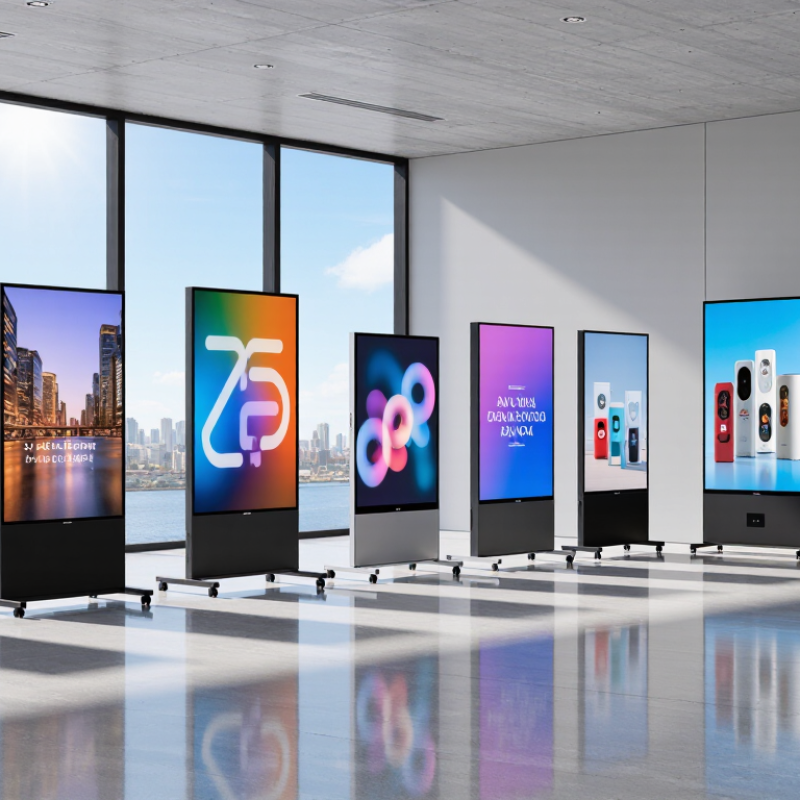
An LED poster screen is a slim, freestanding digital display built from small light-emitting diodes. It resembles a printed advertising poster, but it plays moving images, messages, and live information. Inside, LED modules connect with a control card, power supply, cooling parts, and a protective cabinet. The controller receives content from a media player, USB drive, local network, or wireless connection.
In practical installations, setup can take only a few minutes. Place the screen on a stable floor, connect power, and upload the media file. The controller divides each frame into signals for thousands of red, green, and blue diodes. These diodes adjust brightness rapidly, creating video that viewers see as continuous motion. A fine pixel pitch gives sharper images at close range. Higher brightness helps near windows, but excessive brightness can cause glare and waste electricity.
I once judged a screen mainly by its vivid colors. That assumption was wrong. Viewing distance, ventilation, cabinet weight, and service access mattered more during daily use. A reliable buyer should check refresh rate, brightness control, operating temperature, and electrical certification. Screen alignment also deserves attention; uneven feet can make a premium display look careless. Content should match the screen’s portrait ratio, or faces and text may appear stretched. Some wireless connections can fail in crowded venues, so a wired backup remains sensible. Not perfect, but practical.
Key Specifications for Comparing LED Poster Screens
When comparing LED poster screens, pixel pitch should match viewing distance. A 2.5–3.9 mm pitch suits close indoor viewing, while 4.8–6 mm works better in corridors or storefronts. Smaller pitch improves detail but increases cost and power demand. MarketsandMarkets’ 2024 LED Display Market report forecasts strong market growth through 2029, making specification discipline increasingly important for global buyers.
Brightness needs practical judgment. Indoor screens commonly use 800–1,500 nits, while sheltered outdoor locations may require 4,000–5,000 nits. More brightness is not always better. Excessive output can create glare and waste energy. Check refresh rate, too. A minimum of 3,840 Hz helps reduce camera banding during livestreams and promotional filming. A cabinet with front access can shorten maintenance time, especially where rear access is blocked.
Power consumption deserves closer attention. Ask for maximum and typical wattage, not one attractive figure. Also verify input voltage, plug standards, thermal protection, and operating temperature. IP ratings matter outdoors; IP65 protects against dust and water jets, but installation quality still matters. Grand View Research reported continued expansion in digital signage demand in its 2024 market analysis, yet buyers should not treat market growth as proof of product quality. Request independent photometric data, color uniformity results, EMC documentation, and measured service life. Some specifications look excellent on paper. Field conditions may disagree.
7 Best LED Poster Screens for Global Buyers? - Key Specifications for Comparing LED Poster Screens | Rank | Typical LED Poster Configuration | Recommended Application | Pixel Pitch | Typical Cabinet Size | Approx. Resolution | Brightness | Refresh Rate | Viewing Distance | Protection Rating | Maximum Power | Typical Weight |
| 1 | Fine-Pitch Indoor Poster | Premium retail, museums, luxury stores and close-viewing exhibitions | 1.5 mm | 640 × 1,920 mm | Approx. 426 × 1,280 pixels | 800–1,200 nits | 3,840 Hz | 1.5–15 m | IP30 front / indoor use | 700–900 W/m² | Approximately 42–52 kg |
| 2 | High-Resolution Indoor Poster | Shopping centers, airports, showrooms and digital signage networks | 1.8 mm | 640 × 1,920 mm | Approx. 356 × 1,067 pixels | 800–1,200 nits | 3,840 Hz | 2–18 m | IP30 front / indoor use | 650–850 W/m² | Approximately 40–50 kg |
| 3 | Standard Indoor Poster | Retail promotions, indoor events, restaurants and corporate lobbies | 2.5 mm | 640 × 1,920 mm | 256 × 768 pixels | 800–1,500 nits | 1,920–3,840 Hz | 2.5–25 m | IP30 front / indoor use | 600–800 W/m² | Approximately 38–48 kg |
| 4 | Fine-Pitch Outdoor Poster | Covered outdoor areas, transit entrances and high-end storefronts | 2.5 mm | 640 × 1,920 mm | 256 × 768 pixels | 4,500–5,500 nits | 3,840 Hz | 2.5–30 m | IP65 front and rear | 900–1,200 W/m² | Approximately 55–70 kg |
| 5 | Outdoor Commercial Poster | Street-facing advertising, outdoor retail and public information | 3.9 mm | 640 × 1,920 mm | Approx. 164 × 492 pixels | 5,000–6,000 nits | 1,920–3,840 Hz | 4–45 m | IP65 front and rear | 850–1,100 W/m² | Approximately 58–75 kg |
| 6 | Energy-Efficient Indoor Poster | Continuous-use signage, chain stores and multi-screen installations | 2.0 mm | 640 × 1,920 mm | 320 × 960 pixels | 800–1,200 nits | 3,840 Hz | 2–20 m | IP30 front / indoor use | 500–700 W/m² | Approximately 38–48 kg |
| 7 | Large-Pitch Outdoor Poster | Long-distance viewing, construction sites and large public venues | 4.8 mm | 640 × 1,920 mm | Approx. 133 × 400 pixels | 5,000–6,500 nits | 1,920–3,840 Hz | 5–60 m | IP65 front and rear | 800–1,100 W/m² | Approximately 60–78 kg |
Specifications are representative market ranges for comparison. Actual values may vary according to cabinet dimensions, LED package, scan mode, operating environment, control system and regional electrical requirements.
Seven Leading LED Poster Screen Options for Global Buyers
Seven Leading LED Poster Screen Options for Global Buyers
Global buyers can choose from seven practical LED poster screen formats. Fine-pitch indoor screens suit boutiques, airports, and hotel lobbies with close viewing distances. High-brightness outdoor screens remain visible under direct sunlight. Mobile poster screens work well for exhibitions and temporary campaigns. Slim wall-mounted models save floor space in narrow retail areas. Double-sided screens attract traffic from two directions. Curved display units create stronger visual impact around columns or entrances. Interactive touch versions support product browsing, wayfinding, and live information.
In retail projects, I have found that brightness alone does not guarantee a useful display. Pixel pitch, viewing distance, ventilation, cabinet weight, and service access matter equally. A screen placed beside a window may need automatic brightness control. A busy shopping area may require front-service maintenance, because moving the cabinet is inconvenient. Check power compatibility, language support, transport packaging, and local technical assistance before ordering.
No option is perfect. I once underestimated installation space, and the screen looked impressive but blocked a service door. Buyers should request real videos, not only edited product images. Ask for measured brightness, refresh rate, warranty terms, spare-part availability, and operating temperature. A dependable supplier should explain limitations clearly. Compare total ownership costs, including mounting, shipping, software, energy use, and maintenance. The best choice is the screen that fits the location, audience, climate, and long-term operating plan.
How to Select the Right LED Poster Screen for Your Market
Choosing the right LED poster screen depends on your market, not only its appearance. Start with viewing distance and indoor lighting. A two-metre viewing distance may suit a fine pixel pitch, while a shopping-centre corridor may need less density. Check brightness in nits, refresh rate, viewing angle, and screen size. A bright screen is not always better. Excess brightness can reduce comfort and increase energy use.
Think about local operating conditions. For warm regions, confirm ventilation, heat tolerance, and stable power requirements. For colder markets, ask about startup temperatures. Review electrical certifications, safety documents, warranty terms, and replacement-part availability before ordering. Content control also matters. Test whether staff can update messages easily through the preferred network system. During one evaluation, installation looked simple, but the rear access was too narrow for quick maintenance. That small detail delayed service.
Tips: Request a live demonstration with your own video files. Measure the doorway, wall space, and viewing distance. Ask for power consumption during normal operation, not only peak use. Compare delivery time and technical support in your region. Do not choose from pictures alone. A sample video may hide uneven brightness or visible seams. Inspect the frame, cable layout, mounting method, and screen performance from several angles. Leaving room for doubt is practical; specifications can look excellent until the screen enters a real store.
Installation, Maintenance, and International Purchasing Factors
Choosing among the 7 best LED poster screens requires more than comparing brightness and price. Installation conditions matter first. Measure doorways, wall strength, ventilation space, and viewing distance before ordering. A lightweight cabinet may simplify indoor installation, while outdoor models need sealed housing, drainage, and stronger anchoring.
Check voltage, plug standards, certifications, and customs requirements in the destination country. Pixel pitch should match viewing distance. Fine pixels suit close retail displays, while wider pitches can reduce costs in large areas. Request sample images, power consumption data, warranty terms, and spare-part availability. International shipping can also add taxes, crating fees, and unexpected delivery delays.
Maintenance is often underestimated. Keep ventilation openings free from dust, inspect cables monthly, and schedule brightness checks after long operating periods. Use remote monitoring when available, but do not trust software alone. Physical inspections still catch loose connectors and moisture damage. A common purchasing mistake is choosing the brightest screen without checking heat management.
Tips: Confirm local electrical support before payment. Ask for a written pixel-dead policy. Keep spare modules and power supplies nearby. Test one unit before ordering many. Small details matter.
7 Best LED Poster Screens for Global Buyers: Installation, Maintenance, and International Purchasing Factors
The chart compares indicative planning benchmarks for seven common LED poster screen configurations. Values represent typical project ranges used for early international purchasing estimates and should be confirmed with the supplier, site conditions, shipping route, and local installation requirements.
Installation and annual maintenance are shown in hours per unit. International lead time includes production, export handling, and typical ocean or air freight planning time.