


What Is the Best China 60mm Stainless Tube Supplier?
Choosing the best 60mm Stainless Tube supplier requires more than comparing online prices. The specification must be clear: 60mm outside diameter, wall thickness, stainless grade, finish, and application. According to the World Stainless Association, global crude stainless steel production reached about 58.4 million metric tons in 2023. This scale reflects strong demand, but it also creates wide differences in quality, documentation, and manufacturing discipline. The best supplier is not always the largest one.
Look closely. Ask for mill test certificates, heat-number traceability, dimensional inspection records, and surface-finish samples. For construction, food-processing, chemical, or mechanical projects, ASTM A554 or ASTM A269 may provide useful reference points, depending on the tube’s purpose. EN 10217-7 can also matter for welded stainless tubes used in pressure-related applications. Industry market studies from Grand View Research and Fortune Business Insights indicate continuing growth in stainless steel demand, especially across construction, transportation, energy, and industrial equipment. However, market growth does not guarantee consistent production.
A practical supplier should explain welding methods, annealing control, straightness tolerance, and packaging protection. The tube should arrive without dents, deep scratches, or exposed contamination. That detail matters.
Price alone misleads.
Supplier experience is easier to test through samples, factory audits, and transparent responses. Some published market figures use different definitions, so comparisons require caution. I may not identify one universal winner. The right choice depends on compliance needs, order volume, delivery distance, and required surface quality. This guide evaluates those factors to help buyers select a reliable 60mm Stainless Tube supplier with greater confidence.
What Is a 60mm Stainless Tube and Where Is It Used?
A 60mm stainless tube usually means a tube with a 60mm outside diameter. However, the measurement can vary by supplier, so buyers must confirm the definition. Wall thickness, inner diameter, length, and tolerance directly affect performance. A 2mm wall and a 5mm wall serve very different purposes.
These tubes are commonly used in handrails, food-processing lines, furniture frames, heat exchangers, and industrial supports. Stainless steel resists moisture, staining, and many cleaning chemicals. Grades should match the environment. A food-contact application may need smooth polishing, while a structural frame may require higher mechanical strength. Surface finish matters too. A bright tube can look excellent, yet poor internal cleaning may remain hidden.
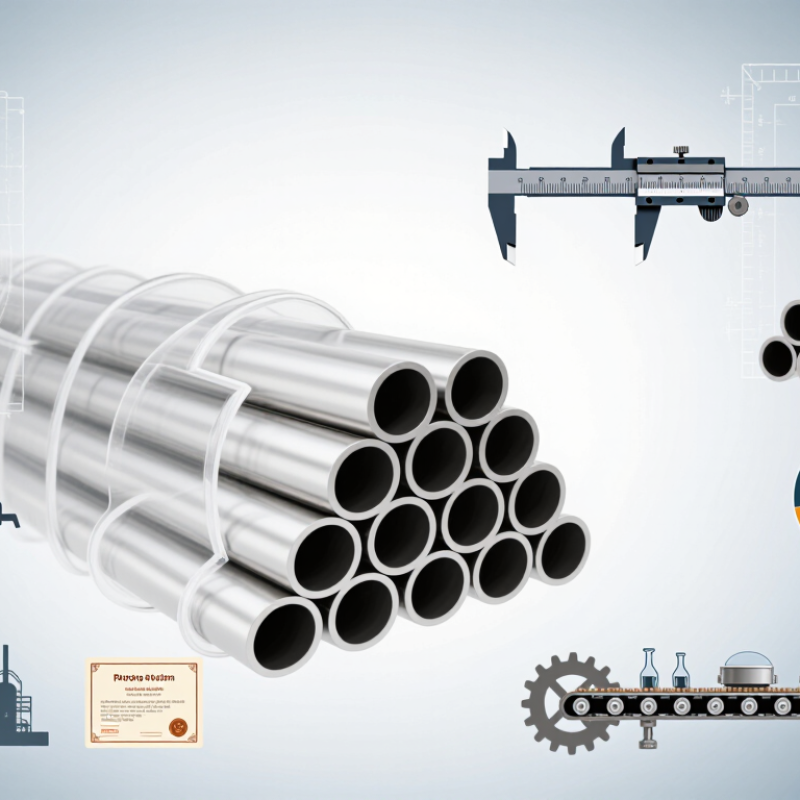
When comparing a China-based supplier, request mill test certificates, dimensional inspection reports, and weld-quality information. Confirm whether 60mm refers to outside diameter or another standard. Ask for sample measurements with calipers, especially at both tube ends. This small check can reveal ovality or uneven walls. It is easy to focus on price and overlook packaging, but scratched surfaces create real losses. Specification sheets are useful, not perfect. Independent inspection may still be worthwhile for large orders. A reliable supplier should explain tolerances clearly, answer technical questions, and provide traceable production records.
What Is the Best China 60mm Stainless Tube Supplier? - What Is a 60mm Stainless Tube and Where Is It Used?
| Data Dimension | Factual Information | Typical Specification or Range | Application Relevance | Supplier Evaluation Point |
|---|---|---|---|---|
| Product Definition | A 60 mm stainless tube normally refers to a tube with a nominal or outside diameter of approximately 60 mm. The exact meaning should be confirmed on the technical drawing or purchase order. | Outside diameter: 60 mm; wall thickness specified separately. | Suitable for fluid transfer, structural frames, heat-exchanger components, and fabricated assemblies. | Request confirmation of whether 60 mm means outside diameter, nominal diameter, or another dimensional designation. |
| Common Tube Types | Available as seamless or welded tube. Welded tube is formed from strip or sheet and longitudinally welded; seamless tube is produced without a longitudinal weld. | Welded: commonly selected for general service and fabrication. Seamless: commonly selected for higher-pressure or demanding service requirements. | The required manufacturing route depends on pressure, corrosion, temperature, dimensional tolerance, and budget. | A capable supplier should clearly state the production method and provide relevant inspection records. |
| Common Stainless Grades | 304 and 304L are widely used austenitic stainless steels. 316 and 316L contain molybdenum and generally offer improved resistance to chlorides compared with 304 grades. | 304/304L: general corrosion resistance. 316/316L: marine, chemical, pharmaceutical, and chloride-containing environments. | Grade selection affects service life, weldability, corrosion resistance, and total operating cost. | Ask for a material test certificate showing chemical composition and mechanical properties for the supplied heat or batch. |
| Typical Wall Thickness | Wall thickness is not defined by the 60 mm diameter alone. It must be selected according to pressure, load, corrosion allowance, fabrication method, and applicable code. | Common commercial examples may include approximately 1.5 mm, 2.0 mm, 3.0 mm, 4.0 mm, and 5.0 mm, subject to production availability. | Thin-wall tubes reduce weight, while thicker walls provide greater rigidity and pressure capacity. | Confirm actual wall thickness, tolerance, ovality, and minimum wall requirement before purchase. |
| Dimensional Standards | Frequently referenced standards include ASTM A269 for seamless and welded austenitic stainless tubing for general service, ASTM A312 for certain seamless and welded pipe applications, EN 10217-7 for welded stainless steel tubes, and GB/T 14976 for stainless steel seamless tubes. | The applicable standard depends on product type, market, service conditions, and project specifications. | Standards define requirements such as dimensions, tolerances, mechanical properties, testing, and surface condition. | The best supplier is one that can manufacture and inspect according to the standard stated in the purchase specification. |
| Surface Finishes | Common finishes include mill finish, pickled finish, polished finish, and brushed or satin finish. Surface terminology may vary by standard and supplier. | Typical polished designations include 180 grit, 240 grit, 320 grit, and 400 grit, depending on the required appearance and roughness. | Polished and hygienic finishes are common in food, beverage, architectural, and pharmaceutical applications. | Specify surface roughness, polishing direction, protective film, and acceptance samples where appearance is important. |
| Dimensional Tolerance | Diameter, wall thickness, length, straightness, and ovality tolerances depend on the selected product standard and manufacturing process. | Do not rely on a generic tolerance; use the tolerance requirements of the applicable ASTM, EN, or GB standard. | Accurate dimensions are essential for tube-to-fitting connections, bending, machining, and automated assembly. | Request inspection data for outside diameter, wall thickness, length, and straightness from each production batch. |
| Pressure and Temperature | Allowable pressure is determined by grade, wall thickness, outside diameter, temperature, weld quality, corrosion allowance, and design code. | No universal working-pressure rating applies to every 60 mm tube. | Process piping and high-temperature service require engineering calculations rather than selection by diameter alone. | A qualified supplier should provide dimensional data and cooperate with pressure-design verification. |
| Typical Applications | 60 mm stainless tubes may be used in fluid lines, sanitary systems, heat exchangers, architectural handrails, mechanical frames, exhaust components, and chemical-processing equipment. | Application determines grade, wall thickness, surface finish, tube type, and testing requirements. | 304L is common for general fabrication; 316L is often preferred where chloride or chemical exposure is significant. | Choose a supplier with documented experience in the required application and relevant quality controls. |
| Welding and Fabrication | Low-carbon grades such as 304L and 316L are commonly selected for welded fabrication because their reduced carbon content helps reduce the risk of sensitization during welding. | Suitable welding procedure depends on grade, wall thickness, joint design, and service conditions. | Important for frames, process lines, sanitary assemblies, and custom-fabricated components. | Ask whether the supplier can provide welding procedures, weld inspection, and suitable post-weld cleaning or passivation. |
| Testing and Documentation | Depending on the order and standard, inspections may include chemical analysis, tensile testing, hardness testing, dimensional inspection, hydrostatic testing, eddy-current testing, and visual inspection. | Required tests should be stated before production and recorded in the inspection documents. | Traceability and testing reduce the risk of receiving material that does not meet the project specification. | Prioritize suppliers able to provide material certificates, test reports, inspection records, and heat or batch traceability. |
| Corrosion Resistance | Stainless steel requires sufficient chromium to form a passive oxide film, but resistance varies with grade, environment, surface condition, contamination, and maintenance. | 316/316L generally performs better than 304/304L in chloride-containing conditions, but it is not immune to corrosion. | Correct grade and surface treatment are important in coastal, chemical, food-processing, and wastewater environments. | Request grade recommendations based on the actual medium, chloride level, temperature, and cleaning chemicals. |
| Packaging and Export Readiness | Stainless tubes are commonly protected with end caps, plastic wrapping, moisture-resistant packaging, and suitable bundling to reduce scratching and contamination during transport. | Packaging should match tube length, surface finish, container loading method, and destination requirements. | Proper packaging is especially important for polished, sanitary, and thin-wall tubes. | Confirm marking, packing list, quantity per bundle, protection method, and export documentation before shipment. |
| Best Supplier Selection Criteria | The strongest supplier choice is based on standard compliance, material traceability, stable dimensional quality, testing capability, communication, lead time, and total delivered cost rather than price alone. | Compare at least samples, certificates, inspection procedures, production capacity, and commercial terms. | A technically suitable supplier helps reduce installation problems, rejected material, delays, and lifecycle cost. | Select the supplier that can consistently meet the complete specification for grade, size, tolerance, finish, testing, documentation, and delivery. |
Note: Final dimensions, pressure ratings, testing requirements, and material grades should be verified against the applicable standard, engineering design, and service conditions before ordering.