What Is the Best Rigid Box Making Machine in 2026?
Choosing the best Rigid Box Making Machine in 2026 requires more than comparing speed figures. A premium machine may promise 35 boxes per minute, yet struggle with thick greyboard, delicate paper, or frequent size changes. Real production is less polished. Operators face glue buildup, uneven corners, worn belts, and rushed orders.
Packaging automation consultant David Zwang offers a practical principle: “The best machine is the one that fits the process, not the brochure.” This idea should guide every comparison. A suitable machine must match the factory’s board thickness, box dimensions, paper types, and daily workload. It should also support accurate positioning, stable corner folding, controlled gluing, and consistent pressing. Small details matter. A misaligned cover can ruin an otherwise attractive luxury box.
This guide examines leading machine types, practical specifications, operating costs, and service considerations for 2026. It considers semi-automatic systems for flexible production and fully automatic lines for higher volumes. Installation space matters. So does operator training. A fast machine without dependable technical support can become an expensive obstacle.
The lowest purchase price is not always the lowest cost. Energy use, tooling changes, rejected boxes, maintenance access, and spare-part availability deserve equal attention. There is no universal winner. That is the uncomfortable part. The “best” choice depends on real production conditions, not marketing language. Before selecting equipment, manufacturers should test representative materials and record cycle times honestly. Even then, some uncertainty remains.
What Is a Rigid Box Making Machine?
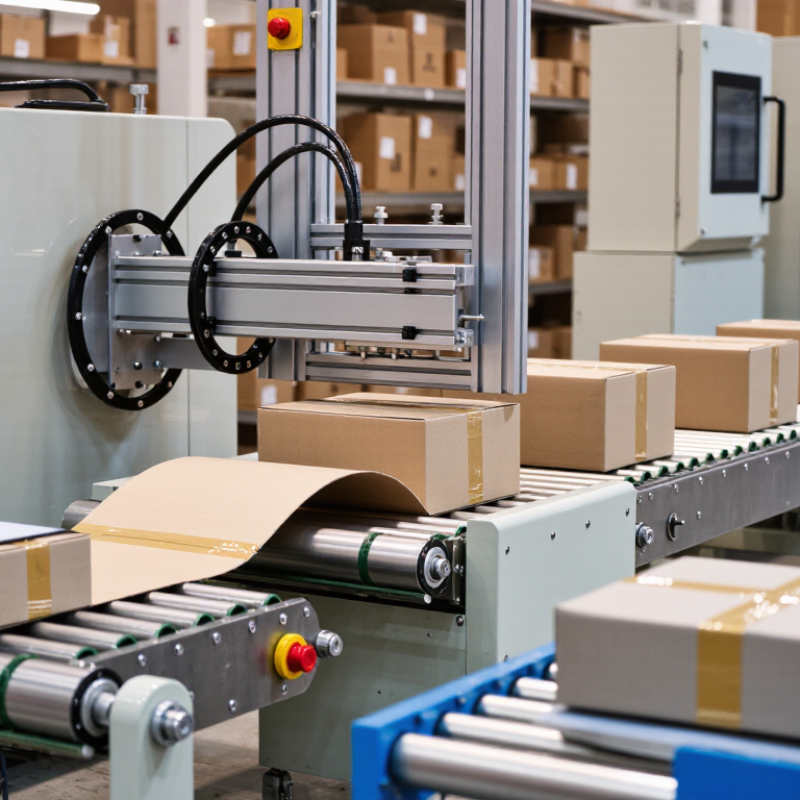
A rigid box making machine is industrial equipment that converts greyboard, printed paper, and decorative materials into sturdy set-up boxes. It usually performs several operations: board cutting, corner pasting, paper wrapping, folding, pressing, and quality inspection. Unlike a folding carton machine, it produces boxes that arrive in their final three-dimensional shape.
The process begins with accurately cut board panels. Small errors can create uneven corners or visible paper wrinkles. Modern machines may combine feeding, gluing, positioning, and pressing in one production line. Semi-automatic equipment still requires skilled operators, especially for unusual sizes, delicate papers, or short production runs. Full automation improves consistency, but it is not always the best choice.
According to Smithers’ The Future of Global Packaging to 2028, the worldwide packaging market is expected to exceed 1.2 trillion dollars by 2028. Grand View Research also reports continued growth in global packaging machinery demand, supported by automation and premium packaging requirements. These figures explain the interest in rigid box equipment. However, market growth does not guarantee a suitable machine. A practical evaluation should examine positioning accuracy, changeover time, board thickness range, waste rate, maintenance access, and operator training. Speed looks impressive. Stability matters more.
In real production, a slower machine with fewer rejected boxes may deliver better value. I would not judge performance from a showroom sample alone. Long-run testing reveals the uncomfortable details: glue buildup, paper feeding variation, and tiring manual adjustments.
What Is the Best Rigid Box Making Machine in 2026?
A rigid box making machine automatically positions, glues, wraps, folds, and presses paperboard components to produce premium setup boxes. The best machine depends on required output, box complexity, format range, and automation level.
The chart compares representative operating throughput ranges for common rigid box production setups. Actual output varies with box size, material, drying time, changeover frequency, operator skill, and quality requirements.
How Rigid Box Making Machines Work
What is the best rigid box making machine in 2026? The answer depends on box size, board thickness, output, and required finish. Grand View Research’s 2024 rigid boxes analysis forecasts roughly 6% annual market growth through 2030. That growth is pushing manufacturers toward faster, more consistent equipment. Yet speed alone is not enough.
A rigid box making machine starts with a sheet feeder. It positions greyboard or paperboard accurately before applying adhesive. A wrapping unit then places printed paper over the board. Folding arms turn the paper around each edge. Pressure rollers remove air pockets and secure the corners. Some systems add automatic lining, corner forming, and quality inspection. Cameras can detect skewed paper, open corners, or glue marks. Small errors matter.
Machine precision matters most.
Operators should check glue temperature, board moisture, and paper tension during trials. According to Smithers’ packaging outlook, automation and material efficiency remain major investment drivers across packaging production. However, reported machine capacity can be misleading. A line rated at 30 boxes per minute may slow sharply with deep lids, magnetic parts, or textured paper. That is where many buyers need more reflection. The best machine is not always the fastest one. It should maintain stable pressure, quick format changes, and reliable alignment across real production conditions. Testing the intended materials remains essential.
Key Features of the Best Machines in 2026
What Is the Best Rigid Box Making Machine in 2026?
The best rigid box making machine in 2026 should deliver accuracy, flexibility, and stable daily performance. In production, a box corner must meet cleanly without visible gaps. Servo-driven positioning helps maintain this precision across different box sizes. Automatic paper feeding also reduces wrinkles, especially with delicate textured sheets.
Camera alignment is another key feature. It can detect small placement errors before glue reaches the board. A reliable glue system should control temperature, pressure, and flow separately. This prevents weak corners and messy edges. Quick-change tooling matters too. Operators can switch formats without spending an entire hour on adjustments.
Modern machines should include clear controls, error sensors, and guarded moving parts. These features support safer, more predictable operation. Remote diagnostics can help technicians identify motor, heater, or sensor problems faster. However, automation is not magic. Dust, uneven board thickness, and poor material storage can still affect results. Regular calibration remains necessary.
From practical production experience, the most useful machine is not always the fastest one. A slightly slower system may create fewer rejected boxes and simpler maintenance work. Energy monitoring, accessible components, and replaceable wear parts can reduce long-term operating costs. Human judgment still matters. Some machines promise perfect alignment, but real workshops rarely stay perfect.
What Is the Best Rigid Box Making Machine in 2026? - Key Features of the Best Machines in 2026
2026 Benchmark Comparison for Rigid Box Making Machines | Evaluation Dimension | Entry-Level Semi-Automatic | Standard Automatic | High-Speed Automatic | Recommended 2026 Benchmark |
| Typical production speed | 8–18 boxes/min | 20–40 boxes/min | 45–80 boxes/min | At least 40 boxes/min for repeat production |
| Suitable box formats | Small and medium rigid boxes | Common gift, cosmetics, electronics and packaging boxes | Large-volume standard and multi-format production | Modular tooling for multiple box sizes |
| Supported paperboard thickness | 0.8–2.5 mm greyboard | 1.0–3.0 mm greyboard | 1.2–3.5 mm greyboard | At least 1.0–3.0 mm with stable feeding |
| Positioning accuracy | Approximately ±1.0 mm | Approximately ±0.5 mm | Approximately ±0.3 mm | Target repeatability of ±0.5 mm or better |
| Changeover time | 30–60 minutes | 15–30 minutes | 10–20 minutes with stored settings | Preferably below 20 minutes |
| Glue application | Manual or basic cold-glue system | Automatic cold-glue roller or nozzle | Metered multi-nozzle system with monitoring | Closed-loop glue control with low waste |
| Automation level | Manual loading and alignment | Automatic feeding, wrapping and pressing | Integrated feeding, inspection, pressing and discharge | Automatic core operations with manual override |
| Quality inspection | Operator inspection | Sensor-based error detection | Vision inspection and automatic rejection options | At least sensor-based monitoring; vision-ready preferred |
| Estimated operating labor | 2–4 operators per line | 1–2 operators per line | 1 operator plus material handling support | One trained operator for routine production |
| Control interface | Manual controls | PLC and touchscreen controls | PLC, touchscreen, recipe storage and production data | Recipe management, alarms and production tracking |
| Energy and material efficiency | Higher setup waste | Moderate waste with stable feeding | Lower waste through servo control and monitoring | Servo drives, standby mode and glue-saving control |
| Best application | Low-volume, customized orders | General-purpose commercial production | High-volume standardized production | Flexible automatic production with consistent quality |
Note: Performance ranges are typical industry benchmarks and may vary with box dimensions, cover material, adhesive, operator skill, machine configuration and production conditions.
Choosing the Right Machine for Your Production Needs
What Is the Best Rigid Box Making Machine in 2026?
Choosing the right machine starts with your production reality, not a showroom speed claim. The best rigid box making machine should match box dimensions, board thickness, daily volume, and changeover frequency. Smithers’ The Future of Global Packaging to 2028 projects the packaging market will reach about 1.38 trillion dollars by 2028. That growth increases pressure on converters to improve output without sacrificing presentation quality. A machine running 30 boxes per minute may be unsuitable if your orders change every hour.
Check forming accuracy, corner folding, adhesive control, and drying stability during trials. Ask operators to test your actual board, paper, and box styles. Small alignment errors become visible on premium lids. Fast changeovers also matter. A five-minute adjustment can save several production hours each week. It sounds minor. It is not.
Automation should support workers, not complicate maintenance. Deloitte’s 2024 Smart Manufacturing Survey found that 86% of manufacturing leaders consider smart production important for competitiveness. Still, sensors cannot replace practical service access. Inspect the glue system, drive components, software interface, and spare-part availability. Request measurable data, including waste rate, uptime, setup time, and energy use. Some specifications may look impressive but lack independent verification. That deserves skepticism. A careful investment compares total ownership cost over five years, including training, maintenance, rejected boxes, and future capacity.