


China Top Welded Ball Valve Manufacturers for Global Buyers

China Top Welded Ball Valve Manufacturers for Global Buyers

Selecting reliable China top welded ball valve manufacturers requires more than comparing catalog prices. Global buyers need verified production capability, consistent quality, and clear technical communication. A Welded Ball Valve may operate underground, inside a pipeline station, or beside high-pressure equipment. Small design weaknesses can become expensive field problems.

This guide introduces Chinese manufacturers serving international energy, chemical, water, and industrial projects. It examines material control, welding procedures, machining accuracy, pressure testing, and documentation practices. Details matter. Buyers should review body materials, ball and seat design, end-to-end dimensions, pressure ratings, and operating temperature. Factory audits can reveal useful evidence, such as clean assembly areas, calibrated testing equipment, and traceable heat numbers.

Certifications deserve careful attention.

Manufacturers may reference API, ISO, or other standards, but buyers should confirm the exact scope and validity. A certificate alone does not prove dependable performance. Inspection reports, sample test records, welding qualifications, and customer references provide stronger support. Export experience also matters, especially when projects require special coatings, fire-safe designs, anti-static features, or customized connection sizes.

Some supplier information may remain incomplete. That is worth acknowledging. Online rankings can change, and impressive claims require independent verification. This article therefore focuses on practical comparison rather than simple promotion. It helps procurement teams identify capable partners, ask sharper questions, and reduce avoidable risks before placing an order. Real reliability is built through evidence, repeatable processes, and honest communication.
China Top Welded Ball Valve Manufacturers for Global Buyers

China’s Role in the Global Welded Ball Valve Manufacturing Industry

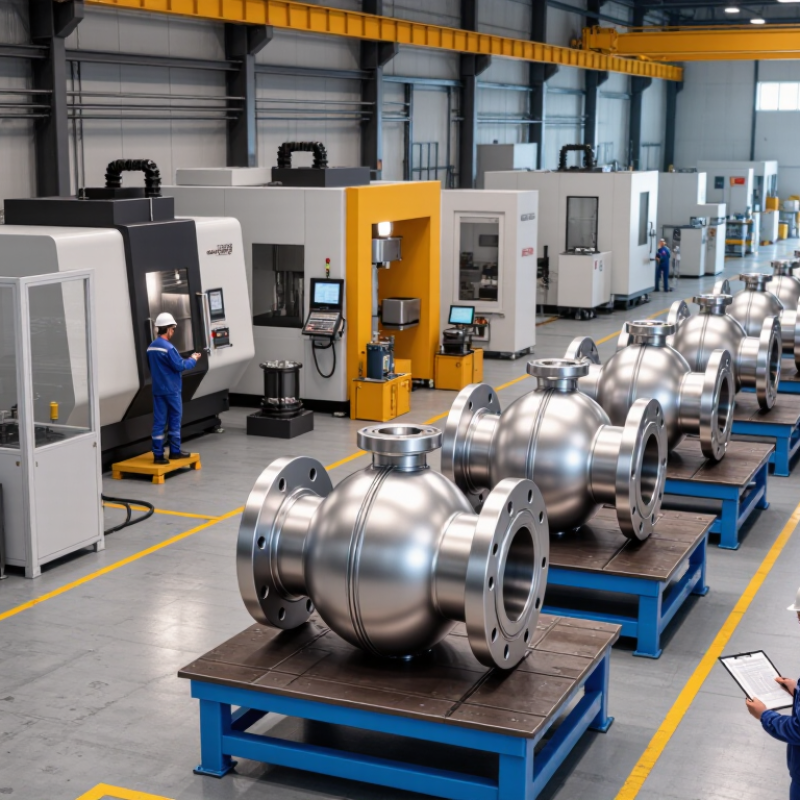
China has become a major production base for welded ball valves used in energy, chemical, water, and industrial piping systems. Its advantage comes from an extensive metalworking network, skilled welding teams, and access to steel, machining, casting, and testing suppliers. Buyers can often source complete valve assemblies from one manufacturing region.

In practice, reliable production depends on more than competitive pricing. Manufacturers must control welding heat, material grades, wall thickness, and dimensional accuracy. Many factories use orbital or automated welding for repeatable joints. They also perform pressure, leakage, shell, and functional tests before shipment. Traceability records should connect each valve to its raw materials, weld procedures, inspection results, and final test reports.

The market is not perfectly consistent. Some suppliers have modern laboratories, while others still depend on manual inspection and incomplete documentation. That difference matters. Experienced buyers usually review quality certificates, welding qualifications, calibration records, and sample test results before placing large orders. Factory visits can reveal practical details, such as clean assembly areas, protected sealing surfaces, and organized storage.

China’s role is also changing. Manufacturers are investing in digital production records, robotic welding, improved coatings, and lower-waste machining. These improvements support demanding export projects, but quality still requires steady supervision. A strong supplier should communicate clearly about design limits, applicable standards, delivery risks, and after-sales support. Candor is valuable. A supplier that admits a process weakness may be more dependable than one making perfect promises.

China has remained the world's largest crude steel producer, accounting for approximately 53%–56% of global output from 2020 to 2024. This large and stable steelmaking base supports the supply chain for welded ball valves, including forged or cast bodies, stem components, and other pressure-bearing parts. The figures represent national and global crude steel production, not individual valve manufacturers.

Source: World Steel Association, World Steel in Figures 2021–2025. Production figures are shown in million tonnes.

Key Features and Applications of Welded Ball Valves

Welded ball valves suit pipelines that demand compact strength and fewer external leak paths. Their fully welded bodies remove many bolted joints, which can reduce corrosion exposure around buried or offshore lines. Forged steel construction also supports high pressure and temperature service. In practice, buyers should verify wall thickness, weld procedures, and non-destructive testing records before approval.

The application case is strong in natural gas, LNG, district heating, and long-distance water systems. GIIGNL’s 2024 Annual Report recorded global LNG trade at about 404 million tonnes in 2023. That volume increases demand for reliable isolation points across terminals and transmission networks. The IEA Methane Tracker 2024 estimated over 120 million tonnes of methane emissions from fossil fuel operations in 2023. This makes low-emission stem sealing and accurate valve testing commercially important, not merely technical details.

Full-bore designs help maintain flow and reduce pressure loss, especially during pipeline pigging. Fire-safe construction, anti-static devices, and emergency shutoff actuators improve operational protection. Yet welded valves are not automatically maintenance-free. Internal seat damage may require line isolation and specialist repair. Selection can also become too optimistic when temperature cycling, abrasive media, or poor alignment is ignored. Buyers should request pressure-test results, material certificates, fugitive-emission data, and documented lifecycle experience for the actual service conditions.

How to Evaluate Chinese Welded Ball Valve Manufacturers

Evaluating Chinese welded ball valve manufacturers requires evidence, not polished brochures. MarketsandMarkets’ 2024 Industrial Valves report estimates the market will grow from about USD 78 billion in 2024 to USD 95 billion by 2029. Rising demand does not guarantee consistent quality. Request the manufacturer’s ISO 9001 certificate, certificate scope, production address, and recent audit records. Verify whether the certificate covers valve manufacturing, not only trading activities.

Ask for heat-number traceability from body material to final inspection. Check WPS, PQR, welder qualifications, radiographic testing, and hydrostatic test records. API 6D and ASME B16.34 provide useful benchmarks for pipeline valves and pressure-temperature ratings. ISO 5208 leakage results should identify the test medium, pressure, duration, and acceptance class. Vague test sheets deserve careful questions. Small gaps matter.

Fugitive emissions also need attention. The IEA Global Methane Tracker 2024 estimates that fossil fuel operations release around 120 million tonnes of methane annually. ISO 15848-1 testing can help assess stem and body-seal emissions. During a factory visit, inspect machining marks, weld uniformity, coating thickness, and actuator alignment. Ask to witness a pressure test on a randomly selected valve. A perfect document package can still hide weak process control. I would treat an unusually low quotation as a technical question, not an immediate saving. Even experienced buyers sometimes overlook spare-part interchangeability and long-term sealing performance.

China Top Welded Ball Valve Manufacturers for Global Buyers - How to Evaluate Chinese Welded Ball Valve Manufacturers

Evaluation Dimension Relevant Technical Benchmark Typical Requirement for Welded Ball Valves Documents or Evidence to Request Suggested Weight
Applicable design standard API 6D, ASME B16.34, or an agreed equivalent standard The valve design, pressure-temperature rating, materials, and functional requirements should be clearly defined against the applicable project standard. Controlled design specification, standard compliance statement, dimensional drawings, and design calculation records 10%
Pressure class and nominal size ASME Class 150, 300, 600, 900, 1500, or 2500; NPS and DN dimensions Confirm that the offered size range and pressure class match the pipeline design. Pressure ratings must be checked against the actual operating temperature. Pressure-temperature charts, product datasheets, dimensional drawings, and nameplate samples 10%
Weld-end configuration ASME B16.25 for butt-welding ends Weld-end outside diameter, wall thickness, bevel geometry, bore alignment, and end-to-end dimensions should be compatible with the connected pipe. Weld-end drawings, dimensional inspection reports, machining tolerances, and pipe compatibility confirmation 10%
Body and trim materials Common materials include ASTM A216 WCB, ASTM A105, ASTM A351 CF8M, stainless steel, and alloy steel, depending on design Materials should be selected according to pressure, temperature, corrosion conditions, fluid composition, and welding requirements. Material test certificates, heat numbers, chemical composition, mechanical properties, and positive material identification records 12%
Seat and sealing system Soft-seat, metal-seat, fire-safe, double-piston-effect, or other specified sealing arrangements Seat material, allowable temperature range, compatibility with the medium, cavity relief, and leakage class must match the service conditions. Seat material specification, seal compatibility statement, fire-safe test report where required, and leakage test results 12%
Testing and inspection API 598 or ISO 5208 for pressure and leakage testing Each valve should receive documented shell, seat, and functional tests at the specified test pressures and duration. Inspection and test plan, hydrostatic test records, seat leakage records, functional test reports, and calibration certificates 14%
Welding and heat treatment control Qualified welding procedures and personnel in accordance with the applicable construction code Welding procedure qualification, welder qualification, preheat or post-weld heat treatment controls, and weld inspection should be traceable where applicable. WPS, PQR, welder certificates, heat-treatment charts, radiographic or ultrasonic test reports, and repair records 10%
Corrosion and sour-service suitability NACE MR0175/ISO 15156 for applicable oil and gas environments For hydrogen sulfide or other aggressive service, material hardness, metallurgy, environmental limits, and coating requirements must be verified. Sour-service compliance statement, hardness test results, material certificates, coating specification, and corrosion-control records 8%
Actuator and accessory compatibility ISO 5211 mounting interface for many quarter-turn actuator applications Torque requirements, mounting dimensions, fail position, manual override, limit switches, solenoid valves, and control signals should be clearly specified. Torque calculation, actuator datasheet, mounting drawing, open-close timing, and accessory list 8%
Quality management and traceability ISO 9001-based quality management and full material-to-product traceability The supplier should be able to trace raw materials, machining, assembly, testing, inspection, and final release to a unique valve identification number. Valid quality certificate, process flow chart, traceability procedure, sample manufacturing record book, and nonconformance procedure 8%
Documentation and export support EN 10204 Type 3.1 material documentation where required by the purchase specification Complete documentation should include drawings, certificates, test reports, operating instructions, packing records, and preservation details. Manufacturing data book index, EN 10204 certificates, inspection release note, packing list, certificate of origin, and export packaging specification 6%
Commercial and after-sales capability Contract-specific performance rather than a universal technical standard Evaluate response time, production capacity, realistic lead time, spare-parts availability, warranty terms, and technical support for installation and maintenance. Quotation, production schedule, warranty terms, reference project details without confidential information, spare-parts list, and service procedure 10%

Note: Standards, materials, pressure classes, inspection scope, and documentation requirements should be confirmed against the purchaser’s project specification, applicable regulations, fluid conditions, and operating temperature.

Manufacturing Standards, Quality Control, and Certifications

China Top Welded Ball Valve Manufacturers for Global Buyers

Reliable welded ball valve manufacturing begins with standards matched to the service conditions. Experienced factories commonly work with API 6D, ASME B16.34, and applicable EN requirements. The correct standard depends on pressure, temperature, media, and installation location. A certificate alone is not enough. Buyers should verify its scope, issue date, and issuing body.

Quality control should start with incoming materials. Inspectors can record heat numbers, perform positive material identification, and check wall thickness. During production, weld procedures require qualified operators and controlled parameters. Non-destructive testing, such as radiography or ultrasonic examination, can reveal hidden weld defects. Each valve should receive shell and seat pressure tests. Torque measurements and fugitive-emission checks add practical evidence.

Details matter.

ISO 9001 supports controlled processes, but it does not guarantee every valve is perfect. API or CE-related documentation may apply only to specific products and markets. Buyers should request test reports, calibration records, material certificates, and valve traceability. Factory audits also help confirm whether procedures match daily practice. A realistic weakness remains: some manufacturers document inspection better than they perform it. Independent witnessing can expose that gap. Clear drawings, inspection plans, and agreed acceptance criteria reduce disputes before shipment.

Export Capabilities and Buyer Considerations in Global Markets

China Top Welded Ball Valve Manufacturers for Global Buyers

Global buyers are examining more than factory prices. Export readiness now includes pressure testing, material traceability, packaging quality, and responsive technical support. Grand View Research estimates the global industrial valves market reached about USD 78 billion in 2023. Its projected growth reflects continued demand from energy, water, chemical, and processing industries. Welded ball valves serve these systems where compact construction and reduced leakage risk matter.

Manufacturers should provide hydrostatic test records, welding procedures, dimensional drawings, and certificates for body and seal materials. Buyers should also check compliance with the required pressure class, temperature range, connection standards, and inspection rules.

Documentation matters. A reliable export package includes clear marking, corrosion protection, wooden-case specifications, and spare-seal information. Delivery terms should state responsibility for freight, insurance, customs documents, and damage claims.

UN Comtrade reports valve trade under HS 848180, but this category combines several valve types. That limitation makes direct welded-ball-valve comparisons imperfect. Buyers may need factory audits and independent inspections. The World Bank’s 2023 Logistics Performance Index also shows major differences in customs efficiency and shipment reliability between markets. Therefore, quoted lead times need practical verification, not optimistic wording.

Small gaps hurt. A missing certificate can delay installation, while weak packaging can damage sealing surfaces before commissioning. Manufacturers with multilingual support and documented corrective actions usually offer stronger long-term value, even when their initial quotation is not the lowest.