


How to Choose the Right Coupler Fitting?

How to Choose the Right Coupler Fitting?

Choosing the right Coupler Fitting is not a minor purchasing decision. It affects leak prevention, connection speed, equipment safety, and long-term maintenance costs. A coupler may look correct on a sample line, yet fail under vibration, pressure spikes, contamination, or repeated connection cycles. The details matter.

Industry reports support this concern. The National Fluid Power Association’s economic outlook tracks fluid-power demand across construction, manufacturing, agriculture, and mobile equipment. Its market indicators show how strongly component demand follows equipment production and replacement activity. MarketsandMarkets also identifies hydraulic equipment growth as a continuing industrial trend. However, broad market growth does not guarantee a suitable fitting for your application. That assumption deserves more caution.

Hydraulic author Brendan Casey expresses the practical lesson clearly: “The cheapest component is rarely the lowest-cost choice.” His observation fits coupler selection. A reliable choice begins with working pressure, flow rate, fluid compatibility, temperature, connection profile, and material. ISO 4413 guidance also emphasizes safe design, proper installation, and controlled stored energy in hydraulic systems. These are not catalogue decorations.

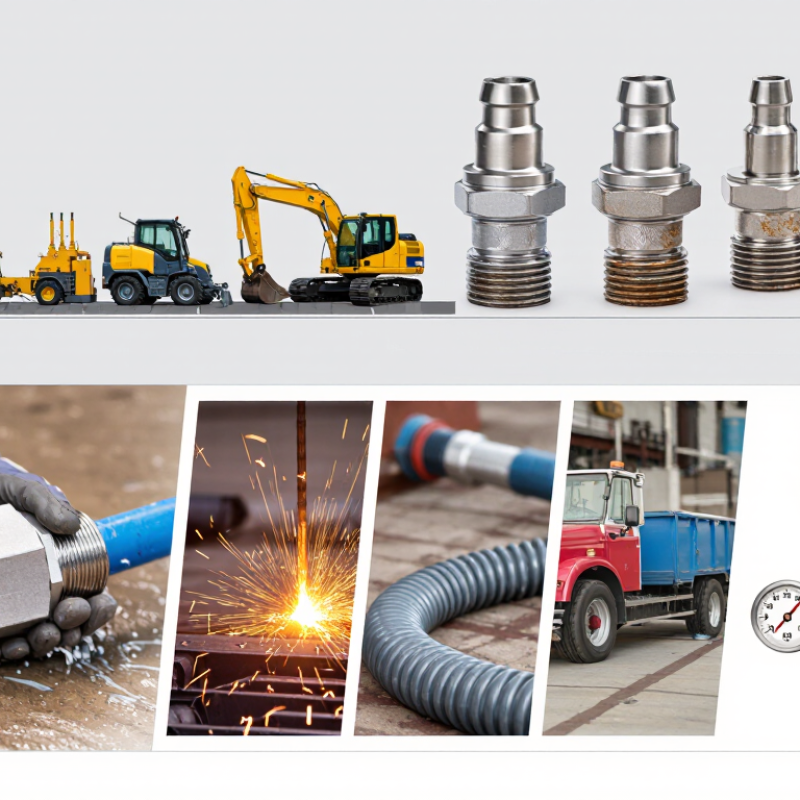
Look closely at the real operating environment. Is the fitting exposed to mud, salt spray, welding sparks, or constant movement? Will technicians connect it wearing gloves? Does the hose twist during service? A steel Coupler Fitting may suit harsh equipment, while stainless steel may better resist corrosion. Quick-disconnect designs can reduce downtime, but only when their pressure and flow ratings match the system.

Even experienced buyers can overlook seal material or interchangeability. That is where a neat specification can become an expensive mistake. The best selection balances safety, performance, serviceability, and verified manufacturer data.
How to Choose the Right Coupler Fitting?

Classify Coupler Types by ISO 7241 Series A and Series B Standards

How to Choose the Right Coupler Fitting?

ISO 7241 classifies hydraulic quick couplers into Series A and Series B. These series use different connection profiles. They should not be treated as interchangeable, even when their sizes appear similar. Series A couplers commonly use a ball-valve design and are selected for many general hydraulic applications. Series B couplers often use a poppet-valve design and support a different interchange profile. Check the standard designation, not only the thread size.

A practical selection starts with the machine’s existing coupler. Inspect the plug nose, sleeve, locking balls, and seal condition. Measure the connection if records are incomplete. A catalog match can still fail in the field. That assumption is easy to make. Confirm the ISO 7241 series before ordering replacements.

Pressure, flow rate, temperature, and hydraulic fluid also affect performance. A coupler rated for high pressure may still restrict flow through a narrow internal passage. Look for pressure-drop data, working pressure, and allowable temperature ranges. Consider dust protection for exposed equipment. Clean connections reduce seal damage and contamination. The fitting material must suit the environment, especially near moisture, chemicals, or abrasive dust. In real maintenance work, identification marks may be worn or missing. When uncertainty remains, compare the physical profile with the manufacturer’s dimensional data and test one sample before changing an entire system.

Match Working Pressure, Burst Pressure, and Flow-Rate Ratings

How to Choose the Right Coupler Fitting?

Match working pressure, burst pressure, and flow-rate ratings before comparing materials or connection styles. Working pressure is the maximum pressure a coupler should handle continuously during normal operation. Burst pressure describes failure resistance under sudden, extreme loading. It is not a target operating level.

Check both ratings against your system’s pressure gauge and pump output. Include pressure spikes caused by valve changes, trapped fluid, or rapid cylinder movement. Temperature can reduce allowable pressure, especially with seals and plastic components. Always review the manufacturer’s pressure chart for the actual fluid and temperature range.

Flow rate matters just as much. A coupler with a narrow internal passage can create pressure loss, heat, and slower actuator movement. Compare the coupler’s rated flow with your hose size and equipment demand. I once focused on thread compatibility and overlooked internal diameter. The system worked, but the actuator responded noticeably slower. That mistake was avoidable.

Allow a practical safety margin instead of selecting a fitting that barely meets the numbers. A working rating of 3,000 psi may be unsuitable for a system that regularly experiences sharp spikes near that level. Check connection frequency, vibration, contamination, and expected service life. Inspect worn seals and damaged locking sleeves during maintenance. Specifications guide the decision, but real operating conditions should challenge your assumptions.

How to Choose the Right Coupler Fitting?

Match Working Pressure, Burst Pressure, and Flow-Rate Ratings

This representative comparison shows common hydraulic coupler sizing ranges. Select a coupler whose working-pressure rating exceeds the system operating pressure, whose burst-pressure rating provides an adequate safety margin, and whose flow rating meets the required flow without excessive pressure drop. Actual ratings vary by connection type, temperature, fluid, hose assembly, and manufacturer.

Verify Port Size, SAE J517 Hose, and Thread Compatibility

How to Choose the Right Coupler Fitting?

Choosing the right coupler fitting starts with accurate port measurement. Verify the port size, not only the outside diameter. Use calipers when possible. A ruler can mislead you. I have seen fittings appear identical while their thread pitches differed. The connection looked correct but leaked under pressure. Check the port’s nominal size, thread diameter, and sealing method before ordering. A small measurement error can damage both components.

Confirm that the fitting matches the SAE J517 hose assembly. Match the hose dash size with the fitting’s hose connection. Check the hose’s working pressure, temperature range, bend radius, and fluid compatibility. The fitting must support the hose rating, not merely fit its diameter. Review the manufacturer’s technical data and inspection requirements. Do not judge compatibility by appearance alone. It is an unreliable shortcut.

Thread compatibility requires careful identification. Common differences include metric, tapered, and parallel threads. Sealing may occur through a cone, O-ring, washer, or thread sealant. These methods are not interchangeable. Never force a mismatched thread. Cross-threading can ruin the port. I still recommend a dry hand-start before using tools. If the fitting does not turn smoothly, stop and recheck it. After assembly, inspect alignment and perform a controlled pressure test. Record the final fitting size and hose specification for future maintenance.

Select Seal Materials for Fluid Chemistry and Temperature Ranges

How to Choose the Right Coupler Fitting?

A coupler fitting should match the seal material to the fluid, not only the connection size. Start with the fluid’s chemical name, concentration, additives, and contamination risks. A seal may resist the base liquid but fail when cleaners or lubricants enter the system. Swelling, cracking, hardening, and leakage are common warning signs.

Temperature needs equal attention. Check the normal range, peak temperature, pressure, and heating cycles. FKM often suits oils and elevated temperatures, while EPDM performs well with water, steam, and some glycol solutions. However, EPDM is generally unsuitable for petroleum oils. PTFE handles many aggressive chemicals, but it can deform under pressure or repeated movement. NBR supports many oil applications, yet ozone and high heat can shorten its service life. Always confirm data from a current compatibility chart and test the actual fluid mixture.

Tips: Record minimum and maximum temperatures, including short spikes. Inspect used seals after service. Look for swelling, surface cracks, flattening, or sticky residue. Do not rely on color alone. It can mislead. Consider pressure pulses, vacuum conditions, installation damage, and storage age. A material that works in a laboratory test may perform differently in a dirty, vibrating production line. Recheck the choice when the fluid formula changes.

How to Choose the Right Coupler Fitting? - Select Seal Materials for Fluid Chemistry and Temperature Ranges
Seal Material Typical Continuous Temperature Range Water and Glycol-Based Fluids Mineral Oils and Hydraulic Fluids Fuels and Aromatic Solvents Acids, Alkalis, and Cleaning Chemicals Steam and Hot Water Main Advantages Important Limitations Typical Coupler Applications
Nitrile Rubber (NBR) −40 to +108 °C
(−40 to +226 °F)
Good Excellent Good with many petroleum-based fuels Limited; generally avoid strong oxidizers and concentrated acids Limited Good balance of oil resistance, abrasion resistance, sealing performance, and cost Poor resistance to ozone, sunlight, weathering, and many phosphate-ester fluids General hydraulic oil, lubricating oil, diesel service, and industrial fluid lines
Fluorocarbon Rubber (FKM) −20 to +200 °C
(−4 to +392 °F)
Fair to good, depending on formulation Excellent Excellent with many fuels and hydrocarbons Good with many mineral acids; limited with hot concentrated alkalis and some amines Fair; specialized grades may be required High-temperature performance, strong resistance to oils, fuels, and many chemicals Low-temperature flexibility is weaker than NBR or EPDM; not a universal choice for steam or hot water High-temperature hydraulic systems, fuel transfer, chemical processing, and hydrocarbon service
Ethylene Propylene Rubber (EPDM) −50 to +150 °C
(−58 to +302 °F)
Excellent Poor with petroleum oils Poor with hydrocarbon fuels and solvents Good with many dilute acids, alkalis, and water-based cleaners Excellent for hot water and many steam conditions Excellent resistance to hot water, steam, weathering, ozone, and many water-based chemicals Rapidly damaged by mineral oils, diesel, gasoline, and many hydrocarbon fluids Water lines, glycol mixtures, hot-water systems, steam service, and outdoor equipment
Polytetrafluoroethylene (PTFE) −200 to +260 °C
(−328 to +500 °F)
Excellent Excellent Excellent Excellent with most acids, alkalis, and solvents Excellent Very broad chemical resistance, very low friction, and excellent high-temperature capability Higher permanent deformation and lower elasticity than rubber; may require energized seals or suitable backup support Aggressive chemicals, solvent service, high-purity fluids, high-temperature lines, and low-friction couplers
Silicone Rubber (VMQ) −60 to +205 °C
(−76 to +401 °F)
Good Poor to fair Poor with many fuels and aromatic solvents Fair; compatibility depends strongly on the chemical and concentration Good for selected hot-water and steam applications Excellent flexibility across a wide temperature range and good resistance to ozone and weathering Low abrasion and tear resistance; unsuitable for many oils, fuels, and high-pressure dynamic service Temperature-cycling equipment, dry gases, laboratory systems, and selected food or medical applications
Polyurethane (AU/EU) −40 to +90 °C
(−40 to +194 °F)
Good Excellent Good with many petroleum-based fluids Limited with strong acids, strong alkalis, and some solvents Poor at elevated temperatures Very high abrasion resistance, tear strength, and resistance to extrusion Temperature capability and hydrolysis resistance vary by formulation; avoid prolonged hot-water exposure unless approved High-cycle hydraulic couplers, mobile equipment, and applications with frequent mechanical wear
Temperature ranges are typical engineering guidelines for continuous service, not universal limits. Final selection should be confirmed against the exact fluid composition, pressure, flow velocity, exposure time, seal compound, and coupler design.

Check ISO 7241 Leakage, Cycle-Life, and Safety Requirements

How to Choose the Right Coupler Fitting?

Selecting a coupler fitting starts with the system, not the catalog image. Check pressure, flow rate, fluid type, temperature, and connection size. A fitting that handles normal pressure may fail during sudden hydraulic spikes. That detail is often missed.

ISO 7241 provides a useful reference for hydraulic quick-action couplers, including performance, interchangeability, and leakage testing. Ask for test data related to the exact coupler series. Leakage should remain controlled at rated pressure and after repeated connection cycles. Inspect both connected and disconnected conditions. A small oil film may indicate seal wear, contamination, or incorrect alignment. Do not treat every damp surface as harmless.

Cycle-life figures need careful comparison. One supplier may test clean couplers at room temperature, while your equipment works in dust, cold, and vibration. Request the test method, load level, fluid, and failure criteria. Then compare those conditions with actual operation. We have seen fittings pass laboratory checks but perform poorly when operators connect them at an angle. That is a practical warning.

Safety also depends on locking reliability and pressure control. Choose a sleeve or locking mechanism that resists accidental release. Confirm whether connection or disconnection is allowed under residual pressure. Add guards where hose movement could injure workers. ISO 7241 is important, but it cannot replace a site-specific risk assessment. The standard helps narrow the choice; field conditions decide whether it is truly suitable.