How to Choose the Right Die Cutting Machine?
Choosing the right Die Cutting Machine is rarely a simple price comparison. The machine must match your materials, production volume, cutting accuracy, and workshop conditions. A paperboard converter may need a flatbed model for precise folding cartons. A label producer may prefer rotary die cutting for speed and continuous output.
Industry consultant John R. Turner offers a useful reminder: “The fastest machine is not always the most productive machine.” That idea deserves attention. A machine running at 8,000 sheets per hour can still lose money if setup takes too long. Frequent die changes, uneven pressure, excessive waste, and poor registration can quietly reduce profit.
Begin with the material. Test the thickest board, the thinnest film, and the most difficult adhesive stock you actually use. Watch the cutting edge under real pressure. Check whether the waste strips separate cleanly, especially around small corners and narrow channels. Ask suppliers for sample trials, not attractive brochures.
Operator experience matters too. A complicated control panel may impress visitors, but confuse a tired technician during a night shift. Service access, spare-parts availability, safety guards, and training should receive equal attention. These details seem ordinary. They often decide long-term reliability.
Some buyers focus too heavily on maximum speed. I have done that myself when comparing equipment specifications. It is an easy mistake. A better decision considers total cost, repeatability, changeover time, and future product changes. The right Die Cutting Machine should support your real workflow, not an ideal production day. Leave room for doubt, testing, and honest calculations before signing an order.
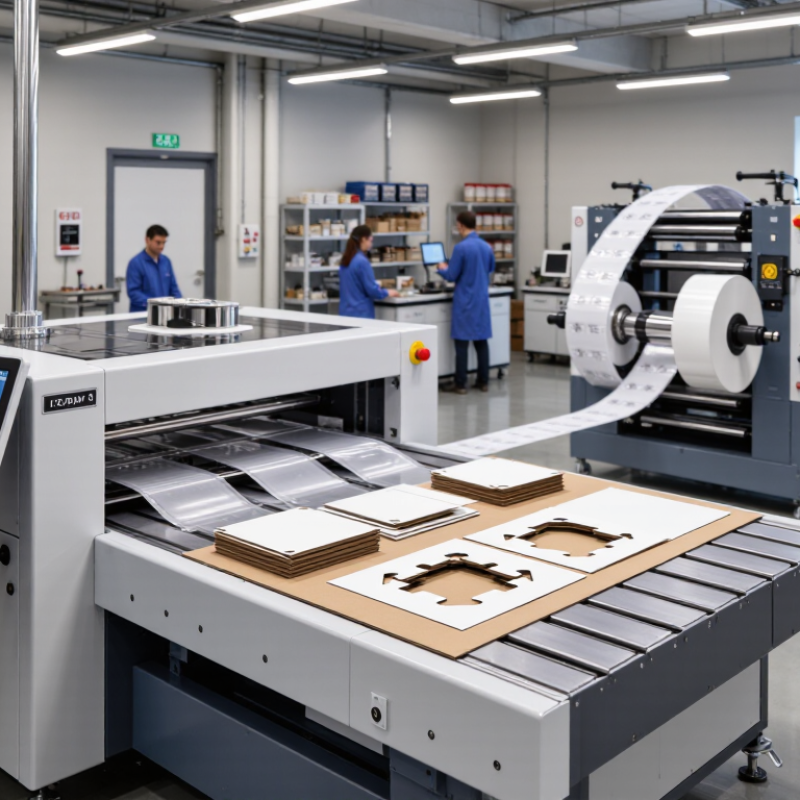
Define the Material, Thickness, and Cutting Requirements
Choosing the right die cutting machine starts with the material, not the machine catalogue.
Material decides the machine architecture. Identify paperboard, corrugated board, foam, film, gasket stock, or laminated sheets. Record grammage, thickness, compressibility, grain direction, and surface coating. ISO 534 provides a recognized method for measuring paper and board thickness. Recycled fibres can also vary between batches. Cepi’s Key Statistics 2023 reported an approximately 82% paper and board recycling rate in Europe for 2022. That sustainability success can create uneven stiffness. Measure twice.
Your cutting requirements should be equally specific. Define sheet size, production volume, die shape, crease depth, perforation frequency, stripping needs, and acceptable registration error. Flatbed systems often suit short runs, thick stock, and complex prototypes. Rotary systems usually support faster repeat production. PMMI’s Packaging Machinery Trends report identifies automation and shorter changeovers as important investment priorities. Therefore, assess setup time, tooling replacement, operator skill, and waste percentage, not only maximum speed. A machine rated for 2 millimetres may still struggle with dense board or layered materials.
Tips: Request test cuts using your actual material. Bring the thickest and thinnest samples. Measure edge quality, crushed fibres, burrs, and crease accuracy. Ask for results at your target speed. I once treated maximum pressure as the deciding figure; it was a poor shortcut. Cutting quality depends on pressure stability, die condition, material variation, and feeding accuracy. Document every result before purchasing.
Compare Die Cutting Methods and Machine Configurations
How to Choose the Right Die Cutting Machine?
Choosing a die cutting machine starts with comparing the material, output volume, and required accuracy. Flatbed die cutting suits short runs, thick sheets, and frequent design changes. It applies pressure vertically, making setup relatively clear for operators. Rotary die cutting works faster with continuous rolls and stable production schedules. Its cylinders can deliver clean, repeatable cuts at high speed. Laser cutting offers flexible pattern changes, but heat may affect sensitive films or adhesives.
Machine configuration matters as much as the cutting method. A manual or semi-automatic system can fit small workshops with varied orders. Servo-driven equipment supports precise feeding, registration, and tension control during longer runs. Check the available working width, waste removal, inspection access, and tool-change time. A strong configuration should match your actual workflow, not an imagined future factory. I have seen teams overbuy speed and underuse it. That mistake is expensive.
Tips: Test your actual material before purchasing. Measure cut edges under magnification. Ask for samples at production speed, not only demonstration speed. Compare setup time, scrap rate, and operator workload. Leave room for imperfect results; humidity, liner variation, and dull tooling can change performance. Also check maintenance access and technical support response times. A machine that cuts beautifully for one sample may struggle after several hours of continuous operation.
How to Choose the Right Die Cutting Machine?
Comparing flatbed, rotary, and laser die cutting methods by typical production requirements.
Scores use a practical 1–5 comparison scale, where 5 indicates stronger suitability. Flatbed systems are flexible for thick materials and short runs, rotary systems are optimized for high-volume production, and laser systems are well suited to prototypes, intricate designs, and variable data. Actual performance depends on material, tooling, format, and machine configuration.
Evaluate Production Speed, Precision, and Operating Capacity
How to Choose the Right Die Cutting Machine?
Production speed should be measured at the finished station, not only in the machine brochure. Check actual cycles per hour, setup time, waste removal, and changeover delays. Smithers’ industry analysis, The Future of Die-Cutting to 2028, highlights shorter runs and faster job changes as important market pressures. A machine rated at 6,000 sheets per hour may deliver less in daily production. Substrate thickness, grain direction, and tooling quality can change the result.
Precision protects both material and reputation. Measure cutting tolerance across a full sheet, not one perfect sample. For folding cartons, even a small registration error can affect creasing, folding, and glue performance. ISO 12647-based process control supports repeatable print quality, but die cutting still needs physical verification. Keep records of edge quality, crease depth, and rejected sheets. Numbers reveal problems.
Tips: Run a timed trial with your most difficult material. Test three job sizes. Record setup minutes, usable output, and waste percentage. Ask for maintenance intervals and operator requirements. PMMI research on packaging automation continues to identify labor availability and operating efficiency as major investment concerns. More automation may reduce manual work, but it can also increase training needs. That trade-off deserves honest review. A faster machine is not always the better machine.
Calculate Total Cost, Workspace Needs, and Long-Term Value
Choosing a die cutting machine begins with more than its purchase price. Calculate the total cost over three to five years. Include tooling, blades, software, maintenance, electricity, training, and expected downtime. A machine priced lower may require frequent adjustments and replacement parts. That difference can quietly affect every production run.
Measure the workspace before requesting a quotation. Record ceiling height, door width, floor strength, ventilation, and operator movement. Leave room for material storage and safe loading. A compact machine may fit the floor plan, but its feeding area could block a walkway. My first workshop estimate ignored storage space. We had to move finished cartons twice.
Long-term value depends on output, reliability, and flexibility. Compare hourly capacity with your actual order volume, not an optimistic forecast. Check whether the machine handles your common materials and future product sizes. Ask for documented service intervals, training details, and realistic response times. These details show practical reliability better than impressive specifications.
Small differences matter. A faster setup can save hours each week, while poor access may create repeated delays. Calculate labor savings using your real wage rates and changeover times. Then test the numbers against a slow month. The best choice is not always the most powerful machine; it is the one that fits your space, workload, staff, and financial limits without creating hidden costs.