How to Choose the Right Welding Cable for Your Projects?
Choosing the right welding cable for your projects can be challenging. As industry expert John Smith wisely said, “The correct welding cable makes all the difference in safety and efficiency.” When selecting a welding cable, contractors need to consider several crucial factors.
Cable size, type, and insulation matter greatly. Choosing a cable that can handle the welding current without overheating is essential. Yet many overlook the importance of cable length. A longer cable can lead to energy loss and reduced arc quality. A thorough understanding of these details can enhance project outcomes.
Selecting a welding cable should not be rushed. It requires thoughtful consideration and knowledge of specific project needs. Mistakes in this area can lead to severe issues. Reflecting on past experiences can guide better decisions. Taking the time to choose the right welding cable is not just a choice; it’s an investment in your work quality.
Understanding the Basics of Welding Cables
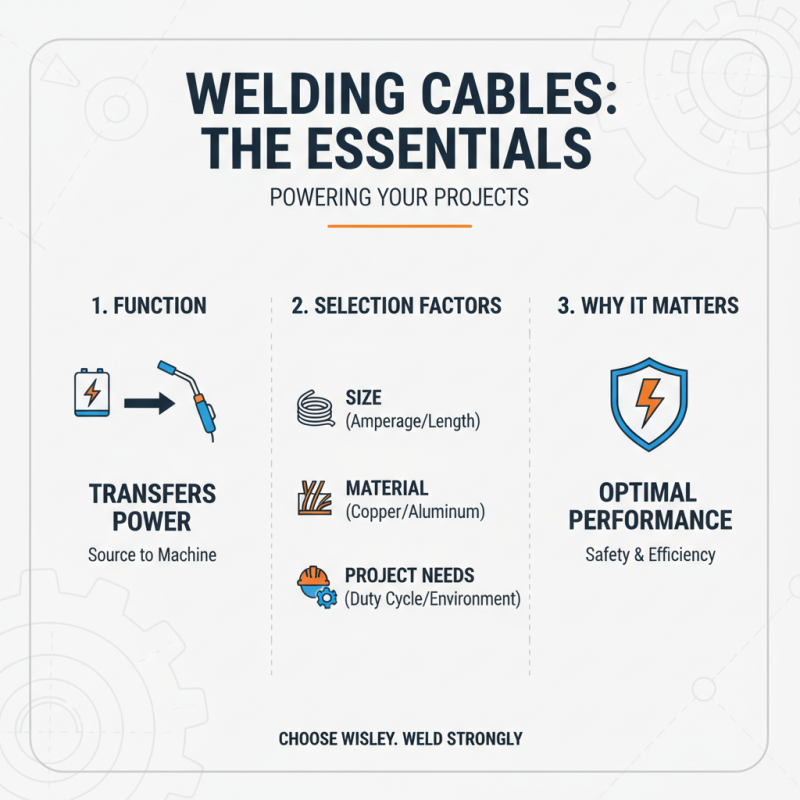
When selecting welding cables, understanding the fundamentals is crucial. Welding cables are essential for transferring electrical power from the source to the welding machine. They come in various sizes and materials, making it vital to know the specific requirements of your project.
The most common types of welding cables are copper and aluminum. Copper cables offer better conductivity, while aluminum is lighter and often cheaper. Gauge size is another important detail. A larger gauge provides more current capacity but is also heavier. It's essential to choose a size that balances performance and ease of use. Oversizing cables may lead to increased weight and unwieldiness on the job.
One common misconception is that all welding cables are the same. They vary in insulation types, flexibility, and heat resistance. Low-quality insulation can lead to safety hazards. Consider the environment where you'll use the cables. They need to withstand harsh conditions without degrading. Reflecting on these aspects can help you choose better. Without proper attention to these details, projects may face serious complications, impacting the overall outcome.
Identifying Your Project's Power and Voltage Requirements
When selecting welding cables, understanding your project's power and voltage requirements is crucial. Each welding project has specific energy needs. Ignoring these can lead to significant issues. For example, using a cable with inadequate amperage may result in overheating. This could damage both the cable and your welding equipment.
Voltage requirements also play a key role. A mismatch can affect arc stability and weld quality. It's essential to account for voltage drop over distance. A longer cable run can lead to reduced voltage at the welder. This discrepancy might result in a poor welding outcome or even equipment failure.
Calculating the appropriate cable size is essential. Use the American Wire Gauge (AWG) standards as a reference. However, don't solely rely on charts. Real-world conditions vary. Environmental factors like temperature can affect performance. A cable that works well in one setting may not suit another. Always test your setup before proceeding with critical projects. Understanding these factors will help ensure a successful welding experience.
Power and Voltage Requirements for Welding Projects
This bar chart displays the power requirements in amperes for various welding types including MIG, TIG, Stick, Flux-Cored, and Plasma welding. Understanding these requirements is crucial for selecting the appropriate welding cable for your projects.
Evaluating Cable Gauge and Length for Optimal Performance
When choosing the right welding cable, evaluating gauge and length is crucial. The gauge indicates the cable's thickness. Thicker cables handle more current without overheating. However, they are also less flexible and heavier. A common choice is 6-gauge for most welding applications. It’s sturdy and can carry sufficient amperage for various tasks. But it can also be cumbersome.
Length matters too. A longer cable can lead to voltage drop, reducing efficiency. Ideally, keep the length as short as possible for optimal performance. Sometimes, it’s tempting to use what’s available. Still, it’s essential to calculate the necessary length accurately. Too short can restrict movement, while too long can decrease current flow.
Evaluate your specific project. Ask questions: Will you be working indoors or outdoors? What types of welding will you perform? Take time to assess your needs. Remember that investing in the right cable can improve your work significantly. Balancing gauge, length, and flexibility ensures better results, reducing frustration and rework. It’s a simple choice that can have a lasting impact.
How to Choose the Right Welding Cable for Your Projects? - Evaluating Cable Gauge and Length for Optimal Performance
| Cable Gauge |
Max Current (Amps) |
Typical Applications |
Recommended Length (ft) |
| 10 AWG |
30 Amps |
Light welding tasks, small projects |
50 ft |
| 8 AWG |
40 Amps |
Medium welding tasks, DIY projects |
75 ft |
| 6 AWG |
55 Amps |
Heavy welding tasks, industrial work |
100 ft |
| 4 AWG |
70 Amps |
Heavy-duty applications, professional welding |
150 ft |
| 2 AWG |
95 Amps |
Very heavy-duty tasks, high-performance welding |
200 ft |
Choosing the Right Insulation Type for Welding Applications
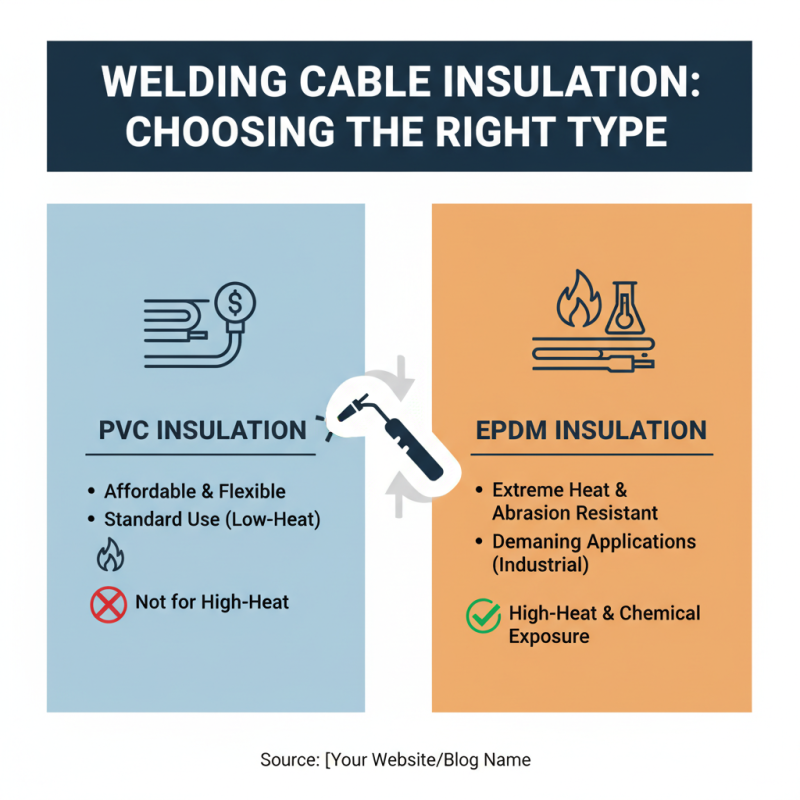
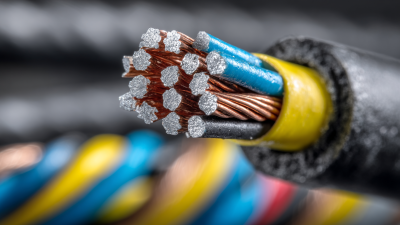
When choosing a welding cable, insulation type plays a crucial role. Different projects require different insulation materials based on heat, abrasion, and chemical exposure. PVC is a common choice; it's affordable and flexible. However, in high-heat environments, it may not offer enough protection. Ethylene Propylene Diene Monomer (EPDM) can handle more extreme conditions, making it a better option for demanding tasks.
Tips for selection: Always assess your project requirements. Examine the environment where the cable will be used. If exposure to chemicals is likely, rubber insulation is ideal. Make sure to measure the temperature and humidity levels too.
Focus on durability. Not all cables are created equal. Some might fray easily. A well-insulated cable can resist wear and tear over time. It's vital to consider how often you'll be moving the cable. A stiff cable can lead to frustration. Look for a balance between flexibility and resilience to ensure efficiency on the job.
Understanding Safety Standards and Compliance in Welding Cables
When selecting welding cables, understanding safety standards is crucial. Welding cables must meet specific safety guidelines to ensure safe operation. Standards like the American National Standards Institute (ANSI) and the National Electrical Code (NEC) help define these requirements. Choosing cables that comply with these standards reduces risks of electrical hazards.
Tips: Always check for labels that indicate compliance with safety standards. Look for certifications that are recognized in your country. It’s essential to understand that some low-cost options might not meet necessary safety requirements.
Furthermore, inspect the cables for durability. High-quality insulation is vital to withstand heat and abrasion. Over time, cables can wear and become unsafe. If you notice any damage, replace them immediately. Avoid using frayed or exposed cables as they increase the chance of electric shock or fire.
Tips: Store cables properly to avoid damage. Keep them away from oil and other corrosive substances. Regularly inspect cables for wear and tear to ensure ongoing safety. Ultimately, awareness and adherence to safety standards can prevent accidents and injuries in your welding projects.