10 Mining Truck Buying Tips for Global Buyers
Buying a Mining Truck is a major operational decision, not a simple equipment purchase. Global buyers must examine payload, haul distance, road conditions, climate, fuel access, service support, and operator capability. A truck that performs well in an Australian open-pit mine may struggle on steep, wet roads elsewhere. Context matters.
Jim Umpleby, former Caterpillar chairman and chief executive, stated, “We are committed to helping our customers build a better, more sustainable world.” That principle belongs in every buying discussion. Sustainability is not only about emissions. It also includes fuel consumption, tire life, component durability, maintenance access, and machine availability. A cheaper truck can become expensive when parts remain in transit for weeks. That happens.
This guide presents ten practical Mining Truck buying tips for global buyers. It considers both technical specifications and daily operating realities. Buyers should compare rated payload with actual material density, because overloaded cycles increase stress and downtime. They should also inspect braking systems, suspension design, cab visibility, and onboard monitoring tools. Small details matter. A clear step, a protected sensor, or a nearby service center can influence safety and productivity.
No checklist is perfect. Mine plans change. Weather surprises operators. Supplier promises should therefore be tested through references, site visits, and transparent lifecycle-cost calculations. The strongest decision may not involve the largest truck or the lowest initial price. It should match the mine’s future, while accepting that some assumptions will need revision.
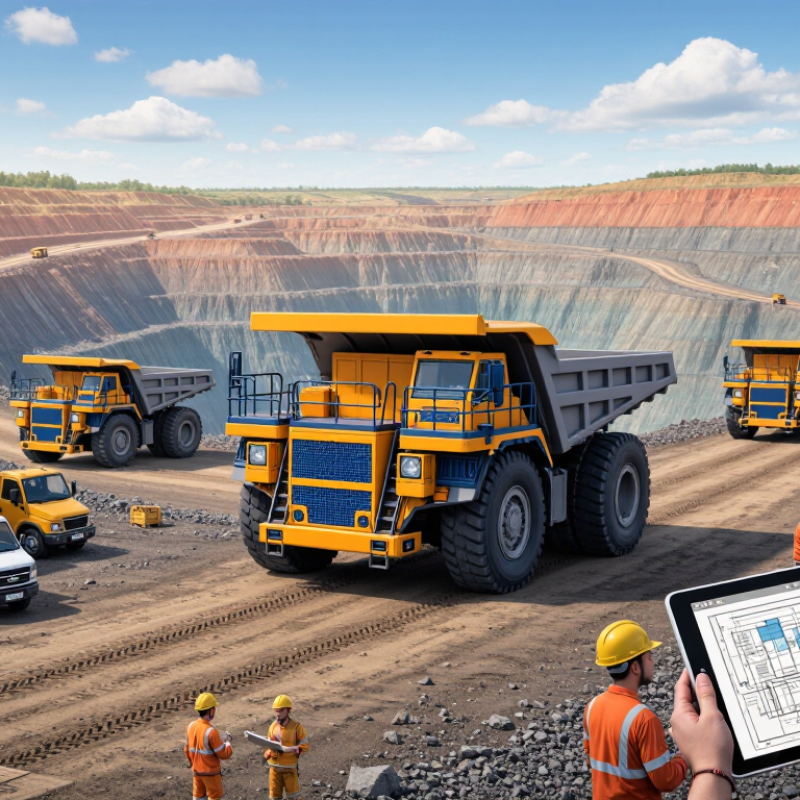
Define the Mine’s Operating Conditions and Haulage Requirements
10 Mining Truck Buying Tips for Global Buyers
Define the mine’s operating conditions before comparing truck prices. Record average payload, haul distance, road gradients, and daily cycles. A truck working on a flat, dry pit faces different demands from one climbing wet ramps. Measure road width carefully. A narrow bend can turn a suitable truck into a costly obstacle. Include altitude, heat, dust, rainfall, and seasonal ground changes. These details affect cooling, braking, traction, tire life, and operator visibility.
Buying tip: Match the truck to the complete haul route, not just the loading area. Calculate loaded and empty travel times. Check whether the target payload remains realistic on steep sections. Inspect the mine after rain, too. Conditions often look better during a dry site visit.
Use production records when available, but question weak data. A reported cycle time may exclude queueing, road repairs, or loading delays. Speak with operators and maintenance staff. They often notice frame stress, brake fade, and cabin vibration before a spreadsheet does. Request test evidence for the expected climate and elevation. Confirm service access, spare-part lead times, training, and diagnostic support before purchase. These factors influence availability as much as engine output. I have seen buyers focus on nominal capacity and overlook turning space. That mistake can reduce utilization for years. Recheck every assumption with a route survey and a realistic duty-cycle estimate.
Evaluate Safety Systems, Durability, and Maintenance Needs
When buying a mining truck, safety starts with the operator’s daily view. Evaluate cab visibility, camera coverage, blind-zone alarms, seat restraints, and emergency access. Ask for test records, not promises. Proof matters. On a site visit, stand near the front corner and watch how quickly the driver sees a person-sized marker. Check braking on a loaded descent, if local procedures permit. Safety systems must remain usable in dust, rain, and low light. A warning that sounds constantly soon becomes background noise.
Durability needs evidence from similar haul roads. Inspect welds around suspension mounts, frame joints, and body hinges. Look for uneven tire wear, fresh paint over cracks, or hydraulic seepage. Review payload history and cycle conditions, because rated capacity alone can mislead. In my experience, a truck surviving rough ground may still suffer from poor cooling or repeated shock loads. Ask for oil-analysis results and documented component replacements. Do not accept a clean exterior as proof of a healthy machine. Looks can mislead.
Maintenance planning often decides whether a truck earns money. Compare service intervals, filter access, diagnostic tools, and technician training requirements. Confirm parts availability in the operating region and realistic delivery times. A daily inspection should reach fluid levels, tires, brakes, lights, and fire protection without special equipment. Request failure data from comparable fleets, while questioning incomplete records. Records matter. Local dust, altitude, and water quality can change maintenance needs sharply. Build those conditions into ownership costs, then verify them with a short monitored trial.
Plan Delivery, Operator Training, Support, and Future Expansion
10 Mining Truck Buying Tips for Global Buyers
Plan delivery before signing a purchase agreement. A mining truck may leave the factory on time, yet arrive late because of port congestion, road limits, or missing documents. Confirm shipping dimensions, unloading equipment, route permits, insurance, and climate protection. Check the final haul road, not only the destination address. Dust, steep gradients, and extreme cold can change the suitable configuration. Build spare time into the schedule. Optimistic planning often fails here.
Tip 1: Request a delivery timetable with inspection points and responsible contacts. Keep essential filters, tires, and service tools near the site before commissioning.
Operator training should begin before the first loaded trip. Training needs to cover braking, payload control, blind zones, radio procedures, and emergency shutdowns. Use practical demonstrations on the actual terrain. Provide materials in the operators’ working language. Test skills, not just attendance. A short classroom session is not enough. That weakness deserves attention.
Tip 2: Ask for training records, refresher plans, and supervisor coaching. Monitor fuel use, overload events, harsh braking, and unplanned stops during the first month.
Support must remain useful after delivery. Clarify warranty limits, technician response times, remote diagnostics, and parts availability across borders. Ask how faults are documented and escalated. For future expansion, check whether new trucks can share maintenance systems, training methods, and workshop equipment. Standardization usually lowers operating complexity. Still, larger fleets need stronger management, not only more vehicles. Review the plan every six months.