Global demand for reliable power infrastructure is reshaping the 4 core cable market. The International Energy Agency’s Electricity 2024 report expects global electricity demand to grow by about 4% annually through 2026. Its Grids and Secure Energy Transitions report also estimates that more than 80 million kilometres of grids must be added or replaced by 2040. These figures point to sustained demand for cables used in buildings, factories, renewable projects, and distribution networks.
Nexans CEO Christopher Guerin has described electrification as “the opportunity of the century.” His statement captures the commercial pressure behind supplier selection. Yet market growth does not guarantee product quality. A cable may look identical in a catalogue. Its copper purity, insulation compound, voltage rating, bending performance, and factory testing can differ significantly. Small differences matter on a crowded construction site.
This guide examines four core cable suppliers serving international buyers. It compares manufacturing capability, certification practice, product range, export experience, delivery reliability, and technical support. Evidence should come from test reports, third-party certifications, factory records, and verified customer projects. IEC compliance deserves close attention, but it should not be treated as the only quality signal. Local installation rules and project specifications still apply.
The ranking is not perfect. Supplier performance can change by region, order size, and production schedule. Buyers should request current technical datasheets and independent verification before placing large orders. A dependable supplier is not simply the lowest-priced option. It is the one that delivers consistent cable performance, traceable documentation, and practical support after shipment.
Top 4 Core Cable Suppliers for Global Buyers?
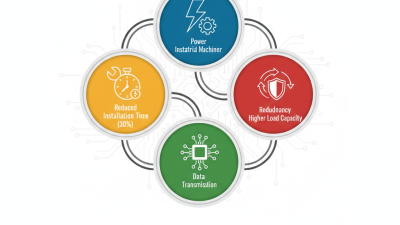
Understanding cable cores is essential before comparing international suppliers. Single-core cables suit short, high-current routes inside switchboards and industrial equipment. Multicore cables reduce installation time in control panels, elevators, and automated production lines. Shielded cables protect signal quality near motors and variable-frequency drives. Armored cables add mechanical protection in buried, outdoor, and heavy-industrial installations.
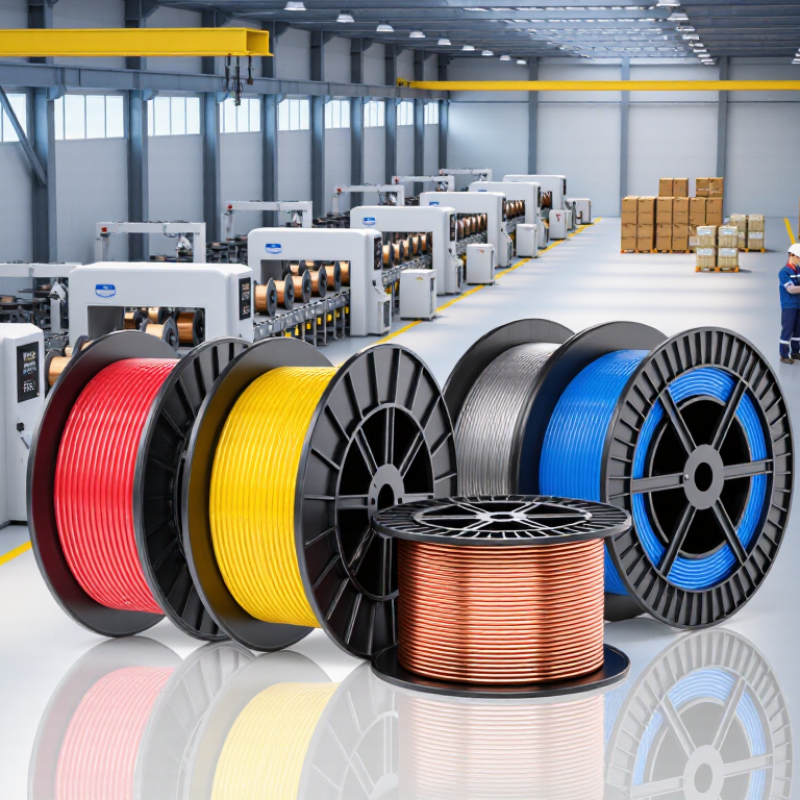
Global buyers commonly compare four supplier profiles: power-cable manufacturers, control-cable specialists, data-cable producers, and custom assembly suppliers. Each profile serves a different application. Power suppliers usually focus on voltage ratings, conductor size, insulation temperature, and fire performance. Control specialists emphasize flexible cores, numbered conductors, and oil-resistant jackets. Data suppliers manage impedance, shielding, and transmission loss. Custom suppliers can adjust lengths, connectors, and packaging for regional projects.
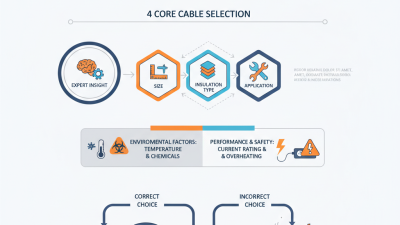
Technical documents deserve careful review. Check conductor material, cross-sectional area, bending radius, operating temperature, and test reports. Confirm that markings match the destination market’s recognized standards. A cable may pass a factory test yet perform poorly when routed beside high-noise equipment. That assumption is risky. I would also request sample lengths before approving large orders. Small details matter, such as brittle insulation during winter installation or oversized jackets inside crowded cable trays. Supplier reliability depends on traceable production records, clear tolerances, stable communication, and realistic delivery commitments.
Top 4 Core Cable Suppliers for Global Buyers?
Criteria for Evaluating Reliable Core Cable Suppliers
Reliable core cable sourcing begins with verifiable production evidence, not attractive catalogs. The IEA Electricity 2024 report expects global electricity demand to grow by about 3.4% annually from 2024 to 2026. This growth increases pressure on cable capacity, delivery schedules, and material consistency. Buyers should inspect conductor materials, insulation compounds, production capacity, and batch traceability. Copper or aluminum certificates should match actual test records. A supplier should also provide routine and type-test results under relevant IEC standards.
Quality systems deserve equal attention. Check calibration records, defect rates, corrective-action reports, and independent inspection access. ISO 9001 certification helps, but certification alone proves little. The International Copper Study Group reported continued pressure on refined copper supply in its 2024 market outlook. That pressure can encourage substitution, delayed deliveries, or unexplained price changes. A dependable supplier explains material sources clearly and offers written change-control procedures. Long-term reliability requires evidence, not confident promises.
Tips: Request samples from separate production batches. Compare conductor resistance, insulation thickness, marking clarity, and packaging damage. Confirm delivery terms, warranty coverage, and rejection procedures before signing. A factory visit can reveal practical details, such as poor moisture control or crowded storage areas. Still, one visit is not enough. No checklist is perfect. Reassess the supplier after the first shipment, especially when results look unusually smooth.
| Evaluation Criterion | Supplier 1 | Supplier 2 | Supplier 3 | Supplier 4 |
|---|---|---|---|---|
| Primary Product Focus | Low-voltage power cables | Medium-voltage power cables | Control and instrumentation cables | Flexible industrial cables |
| Typical Core Configuration | 1, 2, 3, 4 and 5 cores | 1, 3 and 3+1 cores | Multi-core, generally 2–48 cores | Multi-core, generally 2–25 cores |
| Conductor Material | Annealed copper or aluminium | Annealed copper or aluminium | Tinned or bare copper | Fine-stranded copper |
| Common Voltage Range | 300/500 V to 0.6/1 kV | 3.6/6 kV to 18/30 kV | 300/500 V to 450/750 V | 300/500 V to 0.6/1 kV |
| Relevant International Standards | IEC 60228; IEC 60502-1 | IEC 60228; IEC 60502-2 | IEC 60228; IEC 60332; IEC 60754 | IEC 60228; IEC 60332; IEC 60811 |
| Conductor Class | Class 1 or Class 2 | Class 2 | Class 2 or Class 5 | Class 5 or Class 6 |
| Insulation Options | PVC, XLPE | XLPE | PVC, PE, XLPE | PVC, PUR, TPE |
| Maximum Continuous Conductor Temperature | 70°C PVC / 90°C XLPE | 90°C XLPE | 70°C PVC / 90°C XLPE | 70°C PVC / up to 90°C TPE |
| Fire-Performance Options | Flame-retardant | Flame-retardant; low-smoke options | Flame-retardant; low-smoke zero-halogen options | Flame-retardant; oil-resistant options |
| Routine Testing Capability | Conductor resistance, voltage and dimensional tests | Partial-discharge and high-voltage tests | Electrical, flame and insulation tests | Electrical, mechanical and flexibility tests |
| Customization Capability | Core count, cross-section, sheath color | Voltage class, screen type, armour | Shielding, pair arrangement, drain wire | Jacket material, bending radius, connector preparation |
| Typical Minimum Order Basis | Standard sizes: 1–5 km per item | Project-based; commonly 1 km or more | Standard items: 500 m–1 km per item | Standard items: 500 m–1 km per item |
| Indicative Production Lead Time | 3–6 weeks after approval | 6–10 weeks after technical approval | 4–8 weeks after approval | 4–8 weeks after approval |
| Recommended Buyer Application | Buildings, infrastructure and distribution panels | Utility networks and industrial substations | Automation, process control and instrumentation | Robotics, machinery and moving equipment |
| Key Verification Documents | Datasheet, routine test report, packing list | Type-test report, partial-discharge report, technical schedule | Construction sheet, flame-test report, inspection certificate | Flexibility data, mechanical test report, dimensional report |
Note: Voltage ratings, conductor classes, temperature limits and test requirements should be confirmed against the applicable project specification and the latest edition of the referenced standard before purchase.
Top 4 Core Cable Suppliers for Global Buyers?
Profile of the Top Four Core Cable Suppliers
The first supplier profile is an integrated cable manufacturer with copper drawing, insulation, stranding, and testing in one facility. This structure supports stable production and fewer handover errors. Buyers should inspect conductor resistance, insulation thickness, batch records, and factory testing routines. Experience matters here. A supplier may promise capacity, yet still struggle during seasonal demand.
The second profile is a custom engineering supplier serving rail, energy, automation, and industrial equipment projects. Its strength lies in material selection, bending performance, shielding, and connector compatibility. Technical teams should review drawings before production begins. Small design changes can affect heat, flexibility, and installation time. The third supplier is a high-volume regional producer. It usually offers competitive pricing, standard sizes, and shorter delivery routes. However, buyers must verify raw material traceability and independent test reports. Low cost is not proof of reliability.
The fourth profile is a compliance-led supplier focused on documented quality systems and international project requirements. It may provide flame testing, environmental data, inspection plans, and controlled change procedures. Ask for recent certificates, not old files. No supplier is flawless. Some excellent factories communicate poorly, while some polished sales teams lack technical depth. A practical audit should include sample approval, production observation, packaging checks, and after-sales response time. Buyers should compare evidence, not promises.
Top 4 Core Cable Suppliers for Global Buyers?
Choosing a core cable supplier requires more than comparing quotations. Product range should cover low-voltage, medium-voltage, control, armored, and fire-resistant cables. The International Energy Agency’s Electricity 2024 report expects global electricity demand to grow by about 4% in 2024 and 2025. This growth increases demand for reliable grid and building cables. A wider range can reduce supplier changes, but only when technical documents remain consistent.
Quality should be checked through conductor purity, insulation thickness, voltage testing, and traceable batch records. IEC 60502-1 is a useful reference for many power cables. Independent laboratory certificates add confidence. Pricing still matters. Copper represents a major cost, so buyers should compare metal adjustment formulas, not only the final unit price. The World Bank Commodity Markets Outlook continues to identify copper as a critical energy-transition material. Prices may move quickly.
Delivery performance needs practical evidence. Ask for production capacity, typical lead times, port options, and recent on-time shipment data. UNCTAD’s Review of Maritime Transport 2024 highlighted continued pressure on global shipping routes and freight reliability. A supplier with nearby stock may beat a cheaper factory with uncertain transit. My own purchasing experience suggests that samples often look perfect; bulk consistency is harder. That weakness deserves scrutiny. Suppliers should also explain replacement procedures, packaging details, and responses to failed inspections.
Comparison of product range, quality, pricing competitiveness, and delivery performance using normalized benchmark scores.
Scores use a 0–100 scale: higher values indicate broader product coverage, stronger quality performance, more competitive pricing, and more reliable delivery. Pricing competitiveness is measured inversely, so a higher score represents better buyer value.
Choosing a core cable supplier requires more than comparing prices. Start with the cable’s construction, conductor material, insulation, shielding, and rated voltage. A supplier should explain each layer clearly. Ask for drawings, technical data sheets, and samples before approving a large order.
Look for four essential supplier strengths: engineering support, verified manufacturing, dependable testing, and international logistics. Experienced engineers can recommend suitable core counts and cross-sections for your load requirements. Reliable factories provide batch numbers, inspection records, and traceable raw materials. Independent or in-house testing should cover resistance, insulation performance, dimensions, and mechanical durability.
During project reviews, buyers often discover that a low quotation excludes testing, packaging, or delivery protection. Confirm the full scope in writing. Check production capacity, minimum order quantities, lead times, and replacement procedures. A supplier should also communicate clearly when a specification is unrealistic or incomplete.
Do not rely on polished certificates alone. Compare certificate dates, test methods, and product descriptions. Request a recent sample from the same production line. Inspect the jacket for uneven thickness, poor printing, or surface damage. These small details can reveal process weaknesses. No supplier is perfect, and even a strong evaluation may miss a hidden risk. Keep a trial order, record performance, and review the supplier after installation.