Why Choose Marine Cable for Underwater Applications?

Why Choose Marine Cable for Underwater Applications?

Why Choose Marine Cable for Underwater Applications?

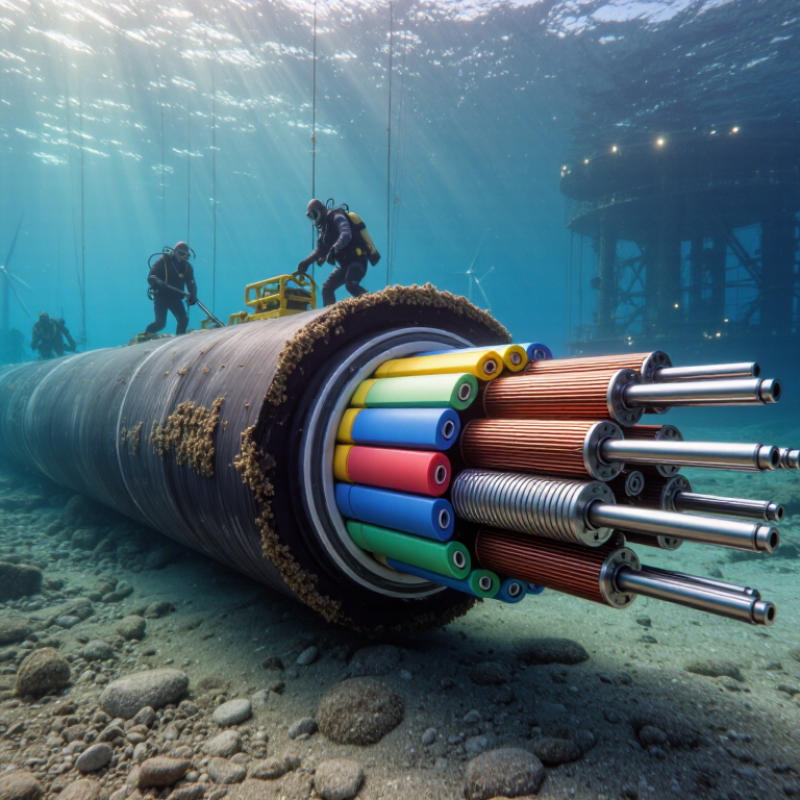
Underwater infrastructure demands more than ordinary electrical wire. A marine cable is engineered for pressure, moisture, movement, and long-term exposure to seawater. Its layered construction usually includes conductors, insulation, shielding, bedding, and a protective outer jacket. These layers help resist abrasion against rocky seabeds and damage from anchors or fishing equipment.

The scale is significant. The International Telecommunication Union reports that submarine cables carry more than 99% of international data traffic. TeleGeography’s 2024 Submarine Cable Map documents hundreds of active and planned systems worldwide. These figures show why cable reliability matters. A subsea link may connect offshore wind farms, ports, islands, data centers, or research platforms. The cable must deliver stable power or communications over difficult distances. Sometimes, for decades.

Marine cable also supports predictable installation and maintenance. Engineers can select armor levels, fiber counts, conductor sizes, and burial depths for specific seabed conditions. A heavily armored cable may suit shallow waters. A lightweight design may reduce installation costs in deeper areas. The choice is never universal. That is important.

“The internet is not in the cloud; the cloud is in the ocean,” says Nicole Starosielski, a leading scholar of submarine communications networks. Her observation reflects a practical reality: underwater cables are physical assets, not invisible services. Still, marine cable is not fail-proof. Faults happen. Repairs can require specialized vessels, favorable weather, and accurate seabed data. A weak survey can become an expensive mistake. Therefore, responsible selection combines manufacturer testing, route assessment, international standards, and lifecycle planning. The best cable is not simply the strongest. It is the cable matched carefully to its environment.
Why Choose Marine Cable for Underwater Applications?

What Is Marine Cable and Where Is It Used?

Marine cable is a purpose-built electrical or communication cable for wet, salty, and mechanically demanding environments. Unlike ordinary indoor cable, it usually has corrosion-resistant conductors, strong insulation, and a durable outer jacket. Some designs also include water-blocking layers, shielding, or flexible armor. These features help the cable withstand spray, vibration, pressure, and repeated movement.

Marine cable is used on boats, ships, offshore platforms, ports, aquaculture systems, and underwater monitoring equipment. It can supply power to pumps and navigation equipment, or carry signals from cameras, sensors, and control systems. In shallow water, installation may involve pulling the cable through a protected route. Deeper systems need careful attention to pressure, bending radius, and long-term sealing. A small design mistake can cause moisture to travel inside the cable.

Tips: Check voltage, current, temperature, water depth, and movement requirements before choosing a cable. Confirm the jacket material suits saltwater exposure. Inspect connectors as carefully as the cable itself. They are often the weak point. Cable size also matters; a thinner option may reduce cost but increase voltage drop and heating. Installation records should include routing, test results, and visible damage. In practice, even a well-rated cable can fail when unsupported or sharply bent. That detail is easy to underestimate.

How Marine Cables Are Designed for Underwater Conditions

Why Choose Marine Cable for Underwater Applications?

How Marine Cables Are Designed for Underwater Conditions

Marine cables are built for constant contact with water, salt, movement, and pressure. Their construction begins with conductors that carry power or signals reliably over long underwater routes. Insulation must resist moisture absorption, temperature changes, and electrical stress. Water finds gaps. That detail matters.

A strong outer jacket protects the cable from abrasion, sunlight near the surface, chemicals, and marine organisms. Many underwater designs include water-blocking layers, which slow moisture travel after accidental damage. Armoring can add mechanical protection where anchors, rocks, or seabed movement create hazards. The cable still needs controlled flexibility, because a stiff design may crack during installation or repeated bending.

Engineers also calculate hydrostatic pressure, pulling tension, bending radius, and expected service temperature. Factory testing may include insulation resistance checks, high-voltage tests, and mechanical inspections. During installation, crews monitor tension and avoid sharp turns around guides or seabed obstacles. From practical inspections, small jacket cuts often deserve more attention than their size suggests. A cable can appear sound while moisture travels beneath the surface.

Cable selection depends on depth, current, signal type, installation method, and maintenance access. A design suitable for a protected harbor may fail in open water with strong currents. It is tempting to focus only on voltage or diameter, but that can overlook recovery needs and long-term movement. Even careful specifications need review after real site conditions are measured.

Why Choose Marine Cable for Underwater Applications?

Marine cables are designed to withstand increasing hydrostatic pressure, seawater exposure, moisture ingress, mechanical tension, and temperature changes. The chart below shows the approximate absolute pressure encountered at different underwater depths.

Approximate pressure is calculated using seawater density of 1,025 kg/m³ and gravitational acceleration of 9.81 m/s². Marine cables use watertight insulation and jackets, corrosion-resistant materials, robust shielding, and strengthened mechanical construction to maintain electrical and optical performance in these conditions.

Key Materials That Protect Cables from Water and Pressure

Why Choose Marine Cable for Underwater Applications?

Marine cables face more than simple wet conditions. Seawater carries salt, pressure, movement, and abrasive particles. Their materials must resist these stresses for years. Tinned copper conductors help limit corrosion where moisture reaches tiny imperfections. XLPE or EPR insulation maintains electrical strength under changing temperatures. These compounds also tolerate repeated bending better than many general-purpose plastics.

Water-blocking materials provide another layer of protection. Swelling tapes and powders expand when water enters a damaged section. They slow longitudinal water travel inside the cable. Gel-filled designs can seal small internal gaps, although they require careful handling during termination. That detail matters. A poorly sealed connection can defeat excellent cable construction.

The outer jacket protects against seawater, impact, and abrasion. Polyethylene offers strong moisture resistance, while polyurethane can improve flexibility and wear resistance. Metallic armor may add mechanical protection around cables exposed to dragging or equipment movement. At depth, hydrostatic pressure can compress weak jackets and force water through tiny paths. Engineers should match the cable structure to the working depth, bending radius, and installation method. Hydrostatic testing, insulation checks, and visual inspection reveal problems before deployment. Still, no material is perfect. A cable can appear sound while moisture slowly migrates beneath its jacket. Careful sealing and disciplined installation remain essential.

Why Marine Cables Offer Reliable Underwater Performance

Why Choose Marine Cable for Underwater Applications?

Marine cables offer reliable underwater performance because they are built for moisture, movement, and harsh marine conditions. Their jackets resist saltwater, abrasion, oil, and repeated bending. Tinned copper conductors help reduce corrosion when humidity reaches the connection area. In practical installations, this matters around pumps, sensors, lighting systems, and control panels. A cable may look strong on deck but fail after months underwater. Tiny jacket damage can become a serious fault.

Tips: Check the cable’s water-resistance rating before installation. Confirm its voltage, temperature, bend-radius, and depth limits. Use sealed connectors and support the cable near moving equipment. Do not rely on appearance alone.

Reliable performance also depends on installation quality. Tight bends can stress insulation and conductors. Loose routing may create friction against metal edges. Regular inspections should look for swelling, cuts, discoloration, and loose glands. Marine cable is not invincible. It can still degrade under pressure, chemicals, or constant vibration. I have seen failures blamed on poor cable quality when the real problem was an unsuitable connector or unsupported cable run. That possibility deserves attention. Select cable according to the environment, not simply the word “marine” on the label. Review technical data, installation guidance, and applicable electrical requirements before use.

How to Select the Right Marine Cable for Your Application

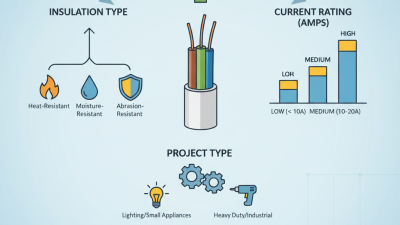
Selecting a marine cable begins with the water, not the catalogue. Identify whether it will face seawater, spray, engine heat, oil, vibration, or repeated bending. A cable inside a dry control cabinet needs different protection from one routed along a wet deck. Small details matter.

Check the required voltage, current, frequency, and conductor size. Then examine the installation path. Tight bends require flexible conductors and a suitable bend radius. Moving equipment may need extra-flexible construction. Fixed routes may benefit from stronger mechanical protection. Choose insulation and sheathing that resist moisture, flame, chemicals, and temperature changes. Shielding can reduce electrical interference near sensors or communication systems.

Do not rely on appearance alone. Review technical data, test reports, and certification for the vessel’s operating environment. Marine cables should meet applicable electrical and marine safety standards. In practical inspections, weak terminations often cause more trouble than the cable itself. Use compatible glands, seals, lugs, and supports. Poor sealing invites water migration. That mistake is easy to underestimate.

A simple checklist can still mislead. Recheck actual load, installation length, voltage drop, and future equipment changes. It is also wise to inspect samples for clear markings, consistent sheathing, and flexible handling. If the route is uncertain, request advice from a qualified marine electrical engineer. The cheapest selection may become expensive after corrosion, overheating, or repeated repairs.

Why Choose Marine Cable for Underwater Applications? - How to Select the Right Marine Cable for Your Application

Selection Dimension Why It Matters Underwater Recommended Specification or Design Feature Typical Application Verification Points
Water Resistance Water can migrate through unsuitable jackets or cable ends, reducing insulation performance and accelerating corrosion. Use a water-resistant outer jacket and sealed terminations. For long-term immersion, select a cable specifically rated for submerged service. Subsea sensors, underwater lighting, pumps, and remotely operated equipment. Check the manufacturer’s immersion rating, water-blocking construction, and termination requirements.
Voltage Rating The cable insulation must withstand the system voltage without breakdown, including transient and fault conditions. Choose a voltage rating equal to or greater than the circuit requirement, in accordance with the applicable electrical code and installation standard. Low-voltage control circuits, battery systems, distribution circuits, and subsea power equipment. Confirm nominal system voltage, maximum operating voltage, insulation level, and required test voltage.
Current-Carrying Capacity Excessive current can cause conductor overheating, insulation damage, and premature failure. Size the conductor according to load current, conductor material, installation method, ambient conditions, grouping, and allowable voltage drop. Electric motors, winches, thrusters, pumps, and marine power distribution. Use ampacity tables from the applicable standard and apply derating factors for temperature and cable grouping.
Conductor Flexibility Underwater equipment may move, bend, or vibrate. A rigid conductor can experience fatigue at repeated bend points. Select stranded conductors and a cable construction matched to the required flexing class and minimum bend radius. Towed instruments, robotic systems, articulated equipment, and moving machinery. Confirm repeated-flex capability, bend radius, torsion limits, and the intended motion profile.
Mechanical Protection Cables may be exposed to abrasion, impact, crushing, snagging, and contact with marine structures or the seabed. Use a robust jacket, protective braid, or armor when the installation environment requires additional mechanical resistance. Seabed installations, cable trays, vessel machinery spaces, and exposed subsea routes. Evaluate abrasion resistance, crush resistance, tensile strength, impact exposure, and support spacing.
Depth and Pressure Hydrostatic pressure increases with depth and can affect jackets, seals, connectors, and cable structures. Select cable and accessories with a stated operating depth or pressure rating appropriate for the complete assembly. Deep-water sensors, inspection equipment, subsea vehicles, and offshore instrumentation. Check maximum working depth, pressure-test data, connector compatibility, and pressure-compensation requirements.
Chemical and Oil Resistance Salt water, oils, fuels, cleaning agents, and hydraulic fluids can degrade incompatible jacket materials. Choose jacket and sealing materials with documented compatibility for the chemicals present at the installation site. Offshore platforms, engine rooms, harbors, aquaculture systems, and industrial water facilities. Review chemical-resistance data, exposure temperature, concentration, and expected contact duration.
Temperature Range Low temperatures can stiffen materials, while high temperatures accelerate insulation aging and reduce allowable current. Select a cable with an operating and storage temperature range covering the actual environment and load conditions. Cold-water operations, engine compartments, heated equipment, and offshore energy systems. Confirm conductor temperature limit, jacket temperature range, cold-flex performance, and thermal derating.
Electrical Shielding Motors, inverters, radios, and other equipment can create electromagnetic interference that affects signal quality. Use an overall shield, individually shielded pairs, or a combination selected for the required noise-control performance. Sonar, data links, measurement sensors, navigation equipment, and control systems. Define signal frequency, impedance, shielding coverage, grounding method, and separation from power cables.
Flame and Smoke Performance On vessels and offshore facilities, cable materials can influence fire spread, smoke generation, and evacuation conditions. Use low-smoke, flame-retardant, or fire-resistant construction where required by the vessel, facility, or governing regulation. Passenger vessels, workboats, offshore platforms, control rooms, and enclosed marine spaces. Verify the exact flame, smoke, toxicity, and circuit-integrity tests required for the installation.
Voltage Drop Long underwater cable runs can cause a significant voltage reduction, especially in low-voltage systems. Calculate voltage drop using conductor resistance, circuit length, load current, and power factor where applicable. Remote lighting, battery-powered systems, cameras, pumps, and distributed sensors. Check both steady-state voltage drop and starting-current effects for motors and other inductive loads.
Termination and Connector Compatibility Many underwater failures occur at cable ends, where water ingress, strain, and sealing problems are concentrated. Use matched wet-mate or dry-mate connectors, glands, boots, and seals with appropriate environmental ratings. Subsea instruments, detachable modules, underwater cameras, and ROV systems. Confirm connector rating, pin arrangement, sealing method, strain relief, mating cycles, and field-termination procedure.
Standards and Certification Marine installations may be subject to vessel rules, classification requirements, national codes, or project specifications. Select products tested and documented for the applicable marine, electrical, and environmental requirements. Commercial vessels, offshore facilities, research vessels, ports, and regulated infrastructure. Review certificates, test reports, product declarations, installation instructions, and approval scope.
Installation and Maintenance Difficult access and costly underwater work make installation quality and service life especially important. Choose cable dimensions, bend radius, pulling strength, and accessories that support safe installation and inspection. Permanent subsea networks, vessel retrofits, offshore monitoring, and underwater power systems. Plan routing, support, minimum bend radius, inspection intervals, spare length, and replacement access.

Note: Final cable selection should be based on the complete installation design, applicable regulations, environmental conditions, load calculations, and verified manufacturer data.