How to Choose the Right Armoured Cable for Your Project?

How to Choose the Right Armoured Cable for Your Project?

Choosing the right armoured cable begins with the project environment, not the cable price. A reliable selection must match voltage, current, installation method, mechanical stress, moisture, temperature, and expected service life. A cable buried beneath a driveway faces different risks from one fixed inside a dry plant room. Small details matter. Soil movement matters too.

Mike Holt, a respected electrical safety educator, often stresses this practical principle: “A cable is only as safe as its installation.” That warning applies directly to armoured cable selection. Even a correctly rated cable can fail when installers ignore bending limits, gland compatibility, earthing requirements, or water sealing. I have seen project teams focus heavily on conductor size while overlooking termination quality. That is an expensive weakness.

This guide examines the decisions that influence cable performance and compliance. It considers steel wire armour, steel tape armour, aluminium armour, conductor materials, insulation types, and environmental protection. It also explains how current-carrying capacity changes with grouping, ambient temperature, and installation depth. Manufacturer data should support every final choice. Generic tables can mislead.

There is no universally “best” armoured cable. The strongest option may be unnecessary, difficult to terminate, or poorly suited to corrosive locations. Conversely, a cheaper cable may create unacceptable maintenance risks. The sensible approach combines engineering calculations, site observations, competent installation, and independent verification. Some project assumptions may still prove wrong. That is why careful review remains essential before purchasing or energising any cable system.
How to Choose the Right Armoured Cable for Your Project?

Define the Electrical and Environmental Requirements of Your Project

How to Choose the Right Armoured Cable for Your Project?

Define the Electrical and Environmental Requirements of Your Project

Choosing armoured cable starts with accurate electrical data, not cable appearance. Record the system voltage, design current, frequency, and expected fault level. Calculate voltage drop across the full cable route. Long runs can create serious losses, even when the conductor size seems adequate. Check the installation method, including tray, duct, direct burial, or open-air routing. Each method changes the cable’s current-carrying capacity. Allow for ambient temperature, grouping, and ventilation. Small details matter.

Environmental conditions deserve equal attention. Underground routes may face moisture, soil pressure, stones, and chemical exposure. Outdoor cables need suitable resistance to sunlight, rain, and temperature changes. Industrial areas may require stronger protection against oils or corrosive vapours. Select conductor and insulation materials according to the expected service conditions. Confirm the armour can withstand mechanical impact without becoming an unwanted electrical hazard. The gland, termination, and earthing arrangement must match the cable construction. A compliant design should follow applicable electrical standards and local inspection requirements.

Do not rely on a catalogue value alone. On real installations, poor termination can undermine excellent cable selection. I have seen neat calculations fail because the route length was underestimated. Recheck drawings against site measurements. Ask a qualified electrical professional to verify fault protection, bonding, and installation limits. Leave room for uncertainty. Projects change, and the original assumptions may not survive construction.

How to Choose the Right Armoured Cable for Your Project?

Define the electrical and environmental requirements before selecting the cable. The chart compares typical IEC-based voltage ratings and maximum continuous conductor temperatures for common power-cable insulation types. Final selection must also consider current-carrying capacity, installation method, short-circuit withstand, mechanical protection, moisture, chemicals, UV exposure, and local regulations.

Reference values: PVC-insulated low-voltage cables are commonly rated for 70°C maximum continuous conductor temperature, while XLPE and EPR insulation are commonly rated for 90°C. Typical low-voltage power cables use a 0.6/1 kV voltage designation; medium-voltage XLPE cables commonly cover ranges such as 3.6/6 kV to 18/30 kV. Always verify the exact cable construction and applicable standard before installation.

Choose the Appropriate Armouring Material and Cable Construction

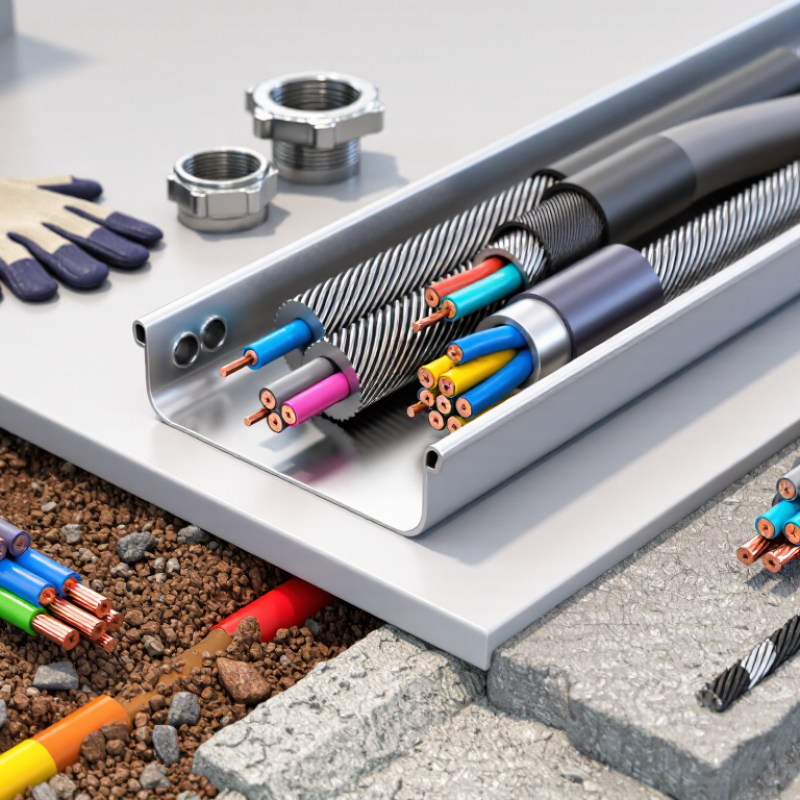
Choosing armouring starts with the site, not the catalogue. Steel wire armour suits buried routes, plant rooms, and areas facing impact. Galvanized steel handles mechanical stress well, but moisture and damaged coatings can invite corrosion. Stainless steel may fit aggressive or coastal environments, although its price deserves careful review. Aluminum armour reduces weight and remains non-magnetic. It may be less suitable where severe crushing is expected.

Cable construction matters as much as the metal choice. Check the conductor, insulation, bedding, armour coverage, outer sheath, and voltage rating together. Single-core power cables need special attention because magnetic armour can increase losses under alternating current. Non-magnetic armour is often considered for these circuits. Multicore designs usually offer simpler armour arrangements. Confirm the minimum bending radius before delivery. A stiff cable can crack around a tight tray corner. It happens more often than plans suggest.

Select glands, cleats, and bonding parts for the exact construction. Armour may serve as a protective conductor, but its fault-current capacity must be verified. Check IEC 60502-1 or the relevant local standard. Then compare test data with actual ground conditions. Do not rely on a familiar specification. Weight, corrosion, and termination space can change the sensible choice. Recheck those details before ordering.

Match Cable Size, Voltage Rating, and Current Capacity

How to Choose the Right Armoured Cable for Your Project?

Match Cable Size, Voltage Rating, and Current Capacity

Choosing an armoured cable starts with the load, not the cable’s outer appearance. Calculate the equipment’s full-load current from its rated power, voltage, and power factor. Then select a conductor size that safely carries this current. Copper and aluminium cables perform differently. The installation method also matters.

Check the cable’s voltage rating against the system voltage. A suitable rating must cover normal operation and expected fault conditions. Do not rely on a cable that “looks heavy enough.” A long run may need a larger conductor to limit voltage drop, especially when motors start or heaters operate continuously. I have seen small sizing decisions create warm terminals and nuisance trips.

Current capacity changes with conditions. Ambient heat, buried depth, grouping, ventilation, and insulation can all reduce the allowable load. Apply the relevant correction factors from recognised wiring standards and the cable manufacturer’s technical data.

Armour may provide mechanical protection, but it does not remove the need for correct earthing and bonding. Confirm the prospective fault current, gland type, termination space, and bending radius before ordering. A calculation can still be wrong when site details are incomplete. Have a qualified electrical professional verify the selection and inspect the finished installation.

Check Installation Conditions, Standards, and Safety Requirements

Choosing the right armoured cable starts with the installation environment, not only the load calculation. Check whether the cable will run indoors, underground, outdoors, or through a wet area. Soil acidity, standing water, sunlight, heat, and mechanical impact can affect service life. Measure the expected current, voltage drop, fault level, and cable length carefully. A small error can create a serious heating problem.

Tips: Inspect the route before ordering. Confirm the cable’s temperature rating, bending radius, and burial suitability. Select glands, cleats, and termination parts that match the cable construction. Keep records of calculations and inspection results. Ask a qualified electrician to verify earthing and bonding arrangements. Do not assume the armour automatically provides the required protective path.

Standards must fit the project location and system design. Check the latest applicable electrical code, product standard, and project specification. Requirements may differ between industrial buildings, residential sites, and public infrastructure. Verify conductor size after considering grouping, ambient temperature, installation method, and future demand. In practice, a neat spreadsheet can still miss a crushed section under a driveway or an oversized gland at a panel. Recheck those details on site. Safety also depends on correct isolation, testing, sealing, and support spacing during installation.

Compare Product Quality, Supplier Support, and Total Project Cost

How to Choose the Right Armoured Cable for Your Project?

Product quality should be checked beyond the cable’s outer appearance. Review conductor material, insulation thickness, armour strength, and manufacturing test records. The cable must match the project’s voltage, current, installation method, and environmental conditions. A cable installed in a damp trench needs different protection from one fixed inside a dry plant room.

Ask suppliers for clear technical support. Reliable teams can review load calculations, bending limits, gland selection, drum lengths, and installation details. Their advice should be specific, not copied from a general catalogue. Check whether they provide batch traceability and respond quickly to technical questions.

Small details matter. A missing gland can delay an entire installation.

Total project cost includes more than the purchase price. Compare transport, storage, cutting waste, accessories, labour, testing, and possible replacement costs. A cheaper cable may require more careful handling or extra protection. That saving can disappear quickly. From practical site reviews, poorly planned drum lengths often create avoidable waste. I have also seen teams choose oversized cables for comfort, then discover higher costs and difficult installation. That choice is understandable, but not always efficient. Request comparable quotations with the same specifications, delivery terms, documentation, and support scope. A dependable decision comes from evidence, not a low figure alone.