

How to Find China Top Electrical Wire Connectors Suppliers?
Finding China’s top electrical wire connectors suppliers requires more than comparing online prices. A reliable search begins with clear technical requirements, including conductor size, insulation material, rated voltage, temperature range, and terminal design. These details prevent unsuitable products from entering your shortlist. A supplier may look impressive online, yet its catalog can hide important differences in plating thickness, crimp strength, and material quality.
Experienced buyers usually examine factory qualifications, production capacity, testing procedures, and export history. Ask for product drawings, sample units, inspection reports, and certification documents relevant to your market. A dependable manufacturer should explain how it controls incoming materials, assembly accuracy, and batch consistency. It should also communicate clearly about minimum order quantities, tooling fees, packaging, and lead times. Small details matter. A loose terminal can cause heat buildup inside a crowded control cabinet.
Factory audits and independent inspections can add valuable evidence. Video calls help, but they are not perfect. A clean showroom proves little. Request a live production view, sample testing, and traceable company information. It is also wise to compare several suppliers rather than trusting one attractive quotation. Pricing deserves attention, but unusually low prices may reflect thinner materials or weaker quality control.
The best decision balances technical performance, documentation, communication, and long-term reliability. Some suppliers will not meet every expectation. That is normal. Review the evidence carefully, record unanswered questions, and test samples before placing a larger order. This practical approach can help you identify trustworthy electrical wire connectors suppliers in China with greater confidence.
Define Your Electrical Wire Connector Requirements
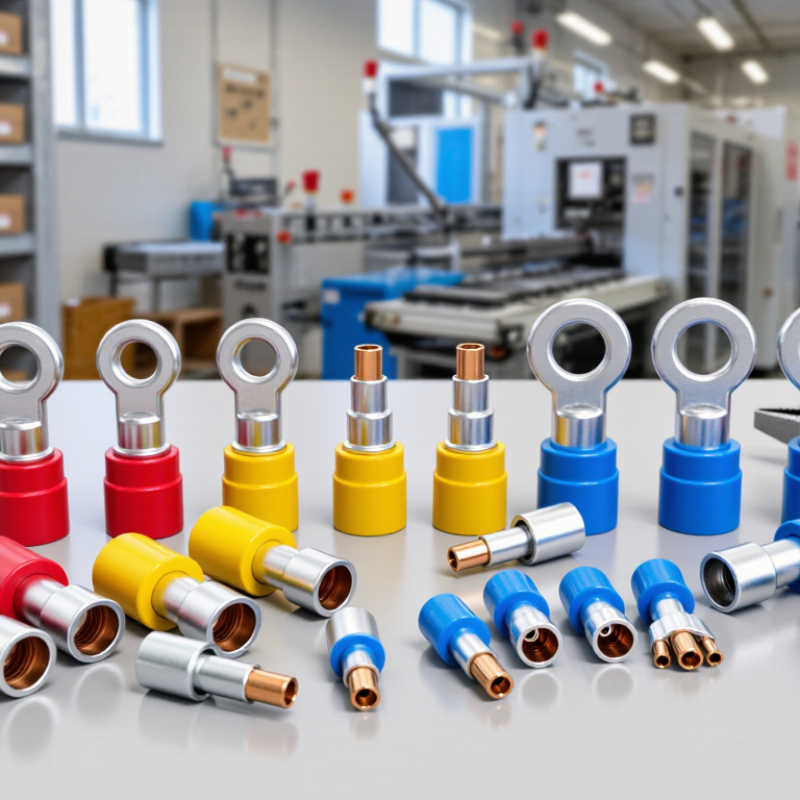
Before searching for top electrical wire connector suppliers in China, define the connector’s working conditions. State the wire material, conductor size, insulation diameter, and connection method. Include the required current, voltage, temperature range, and expected service life. A connector for a control cabinet differs greatly from one used in outdoor equipment. Small details matter.
Describe the installation environment clearly. Mention moisture, dust, vibration, chemicals, and available space. Specify whether the connector needs sealing, locking, strain relief, or tool-free installation. Record the target market and applicable standards, such as IEC or UL requirements. Do not treat a certificate as complete proof. Ask for test reports, material declarations, and traceable production records. Request dimensional drawings before approving samples.
Use practical tests during evaluation. Check wire insertion force, terminal grip, insulation damage, and resistance after repeated connections. A simple pull test can reveal weak crimping. Ask suppliers about tolerances, tooling, minimum order quantities, and batch inspection procedures. Provide one approved sample for comparison. A first specification is rarely perfect. We once overlooked the cable’s outer diameter, causing an otherwise suitable connector to fit poorly. Leave room for corrections. Reliable suppliers should respond with precise questions, not vague promises.
How to Find China Top Electrical Wire Connectors Suppliers? - Define Your Electrical Wire Connector Requirements
| Requirement Dimension | Recommended Specification Options | Typical Selection Guidance | Supplier Information to Request |
|---|---|---|---|
| Connector Type | Crimp terminal, butt splice, wire nut, lever connector, barrier terminal block, or waterproof inline connector | Choose the structure according to whether the connection must be permanent, removable, insulated, or suitable for field installation. | Product drawings, assembly instructions, application photos, and available tooling details |
| Conductor Material | Copper, tinned copper, aluminum, or copper-to-aluminum compatible design | Tinned copper is commonly preferred in humid or corrosive environments; aluminum conductors require compatible connector materials and compounds. | Material composition, plating thickness, corrosion-resistance data, and conductor compatibility statement |
| Wire Size Range | For example: 0.5–1.5 mm², 1.5–6 mm², 14–22 AWG, or 8–4 AWG | The connector must match the conductor cross-sectional area and stranded or solid-wire construction. | Approved wire-size range, wire-construction limitations, crimp chart, and pull-out test results |
| Rated Voltage | Common low-voltage ranges include 300 V, 450 V, 600 V, or 1,000 V DC/AC, depending on construction | Select a rating equal to or higher than the system voltage, considering insulation, spacing, and installation conditions. | Voltage rating, dielectric withstand test, creepage and clearance data, and applicable test standard |
| Rated Current | Typical product ranges may be 5 A, 10 A, 20 A, 32 A, 50 A, or higher | Current capacity depends on contact resistance, conductor size, temperature rise, and installation method. | Current rating by wire size, temperature-rise curves, contact-resistance results, and test conditions |
| Insulation Material | PVC, PA66 nylon, polycarbonate, PBT, silicone rubber, or heat-shrink polyolefin | Select according to temperature, flexibility, chemical exposure, flame performance, and outdoor use. | Material grade, operating-temperature range, flame rating, UV data, and chemical-resistance information |
| Operating Temperature | Common ranges include −40°C to +85°C, −40°C to +105°C, or −55°C to +125°C | Allow additional margin for continuous heat, enclosure temperature, and current-related heating. | Temperature rating, thermal-aging data, derating curve, and high-temperature test report |
| Environmental Protection | Indoor, outdoor, wet location, dust exposure, vibration, salt spray, or submerged installation | For outdoor or wet applications, specify sealing method and required IP protection level, such as IP65, IP67, or IP68. | IP test report, sealing design, humidity test results, salt-spray data, and UV-resistance documentation |
| Connection Method | Hand crimping, machine crimping, screw clamping, spring clamping, push-in, or twist-on installation | Choose a method that provides consistent assembly quality and suits the available production equipment. | Recommended tools, crimp-height requirements, torque values, installation steps, and rework instructions |
| Mechanical Performance | Pull-out resistance, vibration resistance, terminal retention, flexing endurance, and strain relief | Higher mechanical requirements are important for vehicles, machinery, robotics, and moving cable assemblies. | Pull-force values, vibration test method, mating-cycle data, and strain-relief test results |
| Safety and Compliance | Applicable requirements may include IEC, EN, UL, CSA, RoHS, and REACH, depending on the destination market | Compliance must be confirmed for the specific product structure and rating, not only for the factory. | Valid certificates, declaration of conformity, material declarations, and independent laboratory reports |
| Dimensions and Packaging | Overall length, terminal width, insulation diameter, color coding, bag quantity, carton quantity, and labeling | Confirm available installation space and packaging requirements before requesting samples or quotations. | Dimensioned drawings, tolerance table, packing specification, product labels, and carton details |
| Quality Control | Incoming-material inspection, in-process inspection, electrical testing, visual inspection, and batch traceability | A documented quality process helps reduce variation in contact resistance, crimp quality, plating, and insulation dimensions. | Quality-control plan, inspection records, sampling standard, traceability procedure, and corrective-action process |
| Supplier Evaluation | Technical capability, sample consistency, production capacity, lead time, export experience, and after-sales support | Compare suppliers using the same specification sheet, sample-testing procedure, and commercial terms. | Factory audit responses, sample approval records, production lead time, minimum order quantity, and warranty terms |
Related Posts
-
What Are the Top 10 Wire Connector Types for Global Buyers?
-
Ultimate Guide to Wire Connector Types You Need to Know?
-
Why Are There Different Wire Connector Types for Your Projects?
-
2026 Top Electrical Wire Connectors for Every Project Need?
-
How to Choose the Right Power Wire for Your Electrical Projects?
-
How to Choose the Right Welding Cable for Your Projects in 2025