What Are the 2026 Top Electric Cable Wire Types?

What Are the 2026 Top Electric Cable Wire Types?

Choosing the right electric cable wire in 2026 requires more than comparing prices or conductor sizes. Electrical systems now serve homes, data centers, solar arrays, electric vehicles, industrial machinery, and outdoor infrastructure. Each setting demands different insulation, temperature ratings, voltage limits, flexibility, and resistance to moisture or chemicals.

Common options include THHN/THWN-2, XHHW-2, USE-2, RHW-2, photovoltaic wire, EV charging cable, flexible welding cable, and shielded control cable. THHN/THWN-2 remains practical for many building installations, while XHHW-2 often suits feeders exposed to heat and moisture. PV wire is designed for sunlight and rooftop conditions. EV cable requires flexibility, abrasion resistance, and dependable charging performance. The best choice depends on the complete system.

Safety comes first.

Experienced installers check conductor material, insulation markings, ampacity, installation temperature, bend radius, and termination compatibility. They also verify current NEC requirements, applicable UL listings, IEC standards, and the manufacturer’s technical data. A cable that performs well indoors may deteriorate quickly outdoors. A wire sized correctly for steady current may still fail under heat, bundling, or continuous-load conditions.

No single ranking fits every project. That is the point worth remembering. Some product comparisons oversimplify real installation risks, especially when they ignore voltage drop or environmental exposure. Reliable selection combines field experience, engineering calculations, certified products, and inspection requirements. This guide examines the leading electric cable wire types for 2026, explains their practical strengths, and identifies situations where a seemingly suitable option may create avoidable maintenance or safety problems.
What Are the 2026 Top Electric Cable Wire Types?

What Defines the Top Electric Cable Wire Types in 2026

What defines the top electric cable wire types in 2026 is not one material or label. Performance depends on application, installation conditions, and verified safety data. Copper conductors remain strong choices for buildings, control panels, and electric vehicle charging because they offer high conductivity and easy termination. Aluminum conductors reduce weight and material use in large feeders, but installers must manage expansion, oxidation, and connection torque carefully.

Insulation matters just as much. XLPE cables support higher operating temperatures and suit utility, industrial, and renewable-energy systems. PVC remains practical for ordinary low-voltage installations.

Low-smoke zero-halogen insulation is more suitable for tunnels, transport hubs, and crowded buildings. Solar cables need resistance to ultraviolet exposure, heat, moisture, and repeated outdoor stress. Shielded cables also improve signal reliability near motors and power converters.

Demand is becoming harder to ignore. The International Energy Agency reported over 17 million electric car sales in 2024, exceeding one-fifth of global car sales. Its Electricity 2025 report also projects global electricity demand growth of about 4% annually through 2027. These trends increase pressure on charging networks and distribution systems.

IEC 60228 and IEC 60502-1 provide useful benchmarks for conductor construction and power-cable performance.

Still, compliance alone does not guarantee the best result. A cable can meet its rating yet fail through poor routing, excessive heat, or weak terminations. That assumption needs more scrutiny.

How Electric Cable Wires Are Classified by Design and Application

What Are the 2026 Top Electric Cable Wire Types?

How Electric Cable Wires Are Classified by Design and Application

Electric cable wires are classified by conductor design, insulation, shielding, voltage, and installation environment. IEC 60228 separates conductors into classes, from solid cores to flexible stranded constructions. Solid wires suit fixed panels and short routes. Stranded wires bend better during equipment assembly. Very flexible conductors support repeated movement, but they often cost more.

Insulation defines thermal and chemical performance. Thermoplastic materials are common in building cables and general wiring. Thermoset insulation handles higher heat and demanding industrial conditions.

Shielded cables reduce electromagnetic interference around drives, sensors, and data circuits. Unshielded versions remain practical where electrical noise is limited. IEC 60502-1 covers many extruded-insulation power cables from 1 kV to 3 kV.

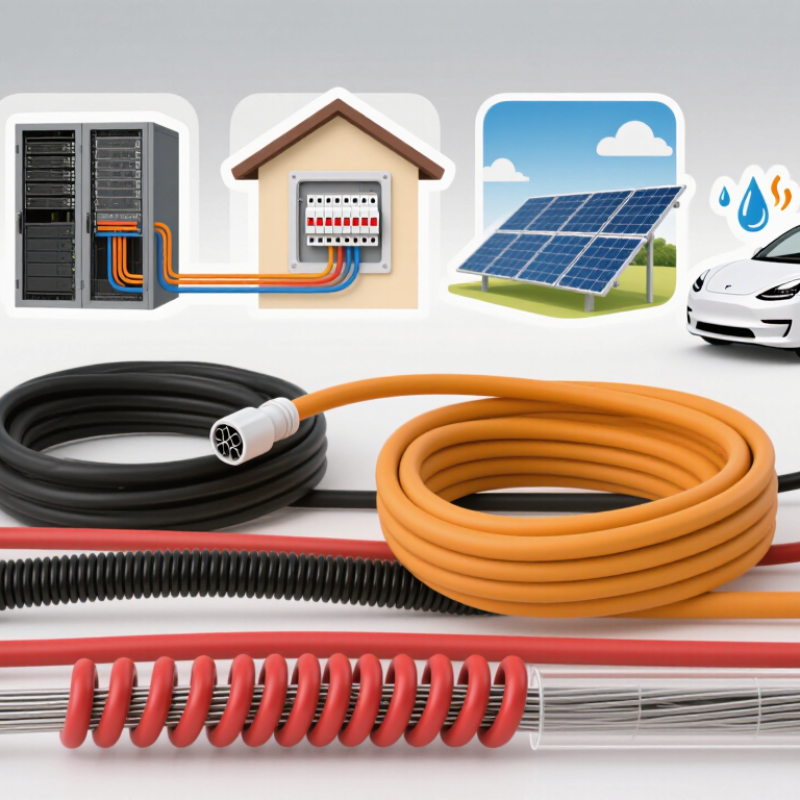
Application changes the preferred cable type. Solar installations need sunlight-resistant cables and carefully sealed connectors. Electric vehicle charging systems require flexible power cables, control conductors, and abrasion resistance. Data centers typically separate power, control, and communication pathways.

The International Energy Agency reported more than 17 million electric cars sold globally in 2024, exceeding 20% of new-car sales. Its Electricity 2025 report also projects nearly 4% annual global electricity-demand growth through 2027. These figures increase demand for dependable distribution and charging cables.

Yet, selection is not automatic. A thicker cable may reduce voltage drop, but it can complicate routing. Real installations expose this weakness. Temperature, bending radius, moisture, and fault protection still need site-specific review.

Key Materials Used in 2026 Electric Cable Wire Manufacturing

What Are the 2026 Top Electric Cable Wire Types?

In 2026, copper remains the leading conductor for building wires, control cables, and compact power systems. Its high conductivity supports smaller cross-sections and dependable connections. The U.S. Geological Survey reported approximately 22 million metric tons of mined copper production in 2024. That figure also exposes a weakness: supply growth may not match rising grid demand. IEA analysis identifies copper as a potential bottleneck for electrification projects.

Aluminum conductors remain important in overhead lines and large power cables. Aluminum weighs far less than copper, reducing tower loads and installation effort. However, installers must manage oxide layers, thermal expansion, and connector design carefully. Poor preparation can create hot spots. It is a practical material, not a careless substitute.

Insulation materials define cable safety and service life. XLPE handles higher temperatures and supports modern medium-voltage networks. PVC remains economical for general wiring, while low-smoke, halogen-free compounds suit crowded public and transport spaces. The International Energy Agency expects electricity demand to keep expanding through 2026, increasing pressure on cable manufacturers to reduce material waste and improve efficiency. Recycled copper and aluminum may help, but quality consistency still needs closer testing. That part is unfinished.

What Are the 2026 Top Electric Cable Wire Types?

Key conductor materials used in electric cable wire manufacturing

Copper remains the benchmark conductor at 100% IACS conductivity, while aluminum provides a lighter and more cost-efficient option at approximately 61% IACS. Tinned copper retains copper’s conductivity and improves corrosion resistance, making it suitable for humid, marine, and industrial environments. Copper-clad aluminum offers reduced weight and material usage, but its conductivity is lower than solid copper.

Note: Conductivity values are approximate room-temperature values expressed as a percentage of the International Annealed Copper Standard (IACS).

Leading Electric Cable Wire Types for Power, Data, and Special Uses

In 2026, leading electric cable wire types serve power, data, and specialized applications. Copper conductors remain popular because they provide strong conductivity and reliable connections. Aluminum conductors reduce weight and cost in larger power installations. However, their connections need careful preparation and regular inspection. Insulation also matters. PVC suits many general installations, while XLPE supports higher temperatures and demanding power conditions. Field technicians check conductor size, voltage rating, heat exposure, and bend radius before installation.

Data networks use different cable designs. Shielded twisted-pair cable helps reduce electrical interference in factories and crowded equipment rooms. Unshielded twisted-pair cable remains practical for many office networks. Fiber-optic cable carries data over long distances with low signal loss and strong resistance to electromagnetic interference. Coaxial cable still serves selected video, antenna, and communication systems. Performance can suffer when installers exceed bend limits or leave connectors poorly protected.

Special-use cables address unusual environments. Fire-resistant cables can maintain circuit operation during emergency conditions, depending on their tested construction. Flexible silicone-insulated wires tolerate repeated movement and high temperatures. Solar cables resist sunlight, moisture, and outdoor temperature changes. Marine and underground cables require stronger jackets against water, pressure, or abrasion. No cable type is perfect. A smaller cable may overheat under continuous load, while an oversized cable may increase installation cost. Reviewing actual site conditions with a qualified professional remains essential.

How to Select the Right Electric Cable Wire for Each Project

What Are the 2026 Top Electric Cable Wire Types?

How to Select the Right Electric Cable Wire for Each Project

Choosing electric cable wire in 2026 starts with the project, not a catalog ranking. In field inspections, I check load, voltage, installation route, and ambient temperature before selecting a cable. Copper conductors remain practical for compact circuits and frequent terminations. Aluminum conductors can reduce weight and cost in larger feeders, but they need correctly rated connectors and careful torque control. Flexible, fine-stranded cable suits moving equipment. Solid conductors fit fixed runs. No cable works everywhere.

For indoor power circuits, insulated building wire is common when the enclosure and wiring method provide protection. In wet areas, choose cable with moisture resistance and an approved jacket. Solar installations often need sunlight-resistant cable. Battery systems may require flexible, high-current cable with secure lugs. Industrial controls can benefit from shielded twisted pairs near motors and variable-frequency equipment. Check conductor size against ampacity tables, correction factors, and allowable voltage drop. A thicker cable is not automatically safer when terminals are mismatched.

Read the insulation marking carefully. Confirm temperature, voltage, conductor material, and permitted installation conditions. Local electrical rules and inspection requirements still control the final choice. I once treated voltage drop as a minor detail. A long run later showed dim lighting and unnecessary heat. That mistake changed my checklist. Measure the route, allow service loops, and verify pulling tension. Ask a qualified electrician to review uncertain calculations. Small assumptions can become expensive.

What Are the 2026 Top Electric Cable Wire Types? - How to Select the Right Electric Cable Wire for Each Project

Cable or Wire Type Typical Construction Common Voltage Range Typical Applications Key Advantages Main Limitations Best Selection Criteria
Thermoplastic Building Wire Solid or stranded copper or aluminum conductor with thermoplastic insulation. Commonly 300–600 V, depending on the insulation designation and local code. Residential and commercial branch circuits, lighting, control panels, and conduit installations. Widely available, easy to terminate, and suitable for dry locations and protected raceways. Some insulation systems have limited heat, sunlight, moisture, or oil resistance. Choose conductor size from ampacity, installation method, ambient temperature, grouping, and voltage-drop requirements.
Cross-Linked Polyethylene Cable Copper or aluminum conductors insulated with thermoset cross-linked polyethylene, often with a jacket or shield. Often used from low voltage through medium voltage; exact ratings depend on construction and standards. Industrial feeders, utility distribution, renewable-energy collection systems, and underground installations. Good thermal performance, moisture resistance, electrical stability, and long service life. Usually less flexible than rubber-insulated cable and may require careful termination procedures. Use when higher temperature capability, outdoor exposure resistance, or medium-voltage performance is required.
Armored Cable Insulated conductors protected by a metallic armor layer, with optional grounding or bonding components. Commonly used in low-voltage power and control systems; rating varies by construction and jurisdiction. Exposed indoor runs, commercial buildings, industrial facilities, and areas requiring mechanical protection. Improved resistance to impact, crushing, abrasion, and certain installation hazards. Heavier, less flexible, and more time-consuming to cut and terminate than unarmored cable. Select based on mechanical-risk level, corrosion environment, grounding method, bend radius, and local approval requirements.
Metal-Clad Cable Insulated conductors enclosed in a continuously interlocked metal sheath, generally with an equipment grounding conductor. Typically used for low-voltage building power and lighting circuits. Commercial interiors, health-care facilities, offices, and industrial branch-circuit installations. Provides mechanical protection and can reduce the need for separate raceway in approved installations. Requires compatible fittings, correct bonding, and adequate space for bending and termination. Choose for code-approved concealed or exposed building wiring where a metal sheath is beneficial.
Tray Cable Multiple insulated conductors with a durable overall jacket, commonly designed for cable-tray and industrial use. Available in low-voltage and selected medium-voltage constructions. Industrial power distribution, motor circuits, control systems, and cable-tray installations. Combines multiple circuits in one cable and is suited to organized industrial routing. May require additional protection where exposed to severe impact, direct burial, or certain chemical conditions. Confirm tray rating, sunlight resistance, oil and chemical compatibility, bend radius, and support spacing.
Flexible Portable Cord Fine-stranded copper conductors with flexible elastomeric or thermoplastic insulation and jacket. Commonly 300–600 V, depending on the cord type. Portable tools, temporary power, stage equipment, appliances, machinery connections, and extension assemblies. Excellent flexibility and resistance to repeated movement when correctly specified. Not automatically suitable for permanent building wiring, fixed concealment, or direct burial. Select according to movement frequency, outdoor exposure, oil resistance, temperature, water exposure, and permitted use.
Rubber-Insulated Flexible Cable Fine-stranded copper conductors with rubber or elastomer insulation and a flexible protective jacket. Commonly available in low-voltage industrial and portable-power ratings. Mining, construction, welding equipment, industrial machinery, and harsh portable-power environments. Strong flexibility, impact tolerance, and improved resistance to demanding environmental conditions. Typically costs more and may have larger dimensions than general-purpose flexible cords. Use when abrasion, oil, water, cold temperatures, or frequent flexing exceeds ordinary cord requirements.
Photovoltaic Cable Stranded copper conductor with sunlight-resistant, weather-resistant insulation and jacket designed for solar circuits. Commonly 600–2,000 V DC, depending on the approved cable construction. Solar-module interconnections, rooftop arrays, outdoor DC wiring, and photovoltaic equipment. Designed for long-term sunlight, outdoor weather, ozone, and temperature exposure. Must be routed and terminated according to DC polarity, connector compatibility, and photovoltaic installation rules. Verify maximum system voltage, conductor temperature, sunlight rating, wet-location approval, and current-carrying capacity.
Electric-Vehicle Charging Cable Power conductors, grounding conductor, and sometimes communication or temperature-sensing conductors in a flexible jacket. Often used in AC charging systems up to 240 V or 480 V, while DC charging systems use higher equipment-specific voltages. Home, workplace, fleet, and public electric-vehicle charging equipment. Supports high continuous current, repeated handling, and communication between charging equipment and the vehicle. Cable size, connector type, cooling method, and charging mode must match the complete charging system. Select by charging level, maximum continuous current, installation length, outdoor rating, flexibility, and applicable electrical code.
Control and Instrumentation Cable Small conductors arranged in pairs or multi-conductor groups, often with shielding and a drain wire. Usually low voltage or signal-level circuits; exact limits depend on the cable design. Sensors, automation systems, process controls, alarm circuits, and industrial communication interfaces. Reduces wiring complexity and can improve signal integrity when shielding is correctly installed. Generally unsuitable for high-power loads and can suffer interference if routed incorrectly. Match conductor count, signal frequency, shielding type, noise environment, temperature, and separation from power cables.
Fire-Resistant or Low-Smoke Cable Conductors with insulation and jacket materials formulated to limit flame spread, smoke, or corrosive gas release. Available across different low-voltage and specialized system ratings. Public buildings, transportation facilities, emergency systems, data spaces, and densely occupied areas. Can improve fire performance and help reduce smoke or corrosive emissions during a fire. May have higher purchase cost and may not replace a required fire-resistive circuit-integrity system. Confirm flame, smoke, toxicity, circuit-integrity, plenum, and local building-code requirements rather than relying on a generic label.
Selection note: Final cable selection should be verified by a qualified electrical professional and the applicable local code. Check conductor material and size, allowable ampacity, continuous-load requirements, voltage drop, temperature rating, installation method, environmental exposure, mechanical protection, fire performance, grounding, and required certifications before installation.