

What Are the Top Electrical Wire Types for Global Buyers?
Choosing the right electrical wire begins with the application, not the price tag. Global buyers must evaluate voltage, current, temperature, flexibility, installation space, and expected service life. A compact control cabinet may need flexible copper conductors with PVC insulation. An underground feeder may require XLPE insulation, protective armor, and strong moisture resistance. Each environment creates different risks.
This guide introduces the main electrical wire types used across industrial, commercial, residential, and renewable energy projects. It considers copper and aluminum conductors, PVC and XLPE insulation, rubber cables, armored designs, fire-resistant wires, and photovoltaic options. Practical selection also involves conductor size, insulation thickness, color identification, packaging, test reports, and traceability. Small details matter.
Standards vary by destination.
Buyers should check applicable IEC, UL, BS, or regional requirements before ordering. Certification marks alone may not prove complete product suitability. A supplier’s test data, factory quality controls, sample inspection, and production consistency deserve equal attention. Reliable sourcing depends on evidence, not attractive catalog language.
There is no universal winner.
A low-cost wire may become expensive after difficult installation, early insulation failure, or incompatible terminals. Conversely, an oversized cable can increase weight and waste without improving performance. This comparison may simplify some choices, but it cannot replace engineering review. That limitation is important. By examining materials, construction, performance, and supplier reliability together, buyers can build a more defensible purchasing decision for cross-border projects.
Electrical Wire Basics: Structure, Materials, and Performance
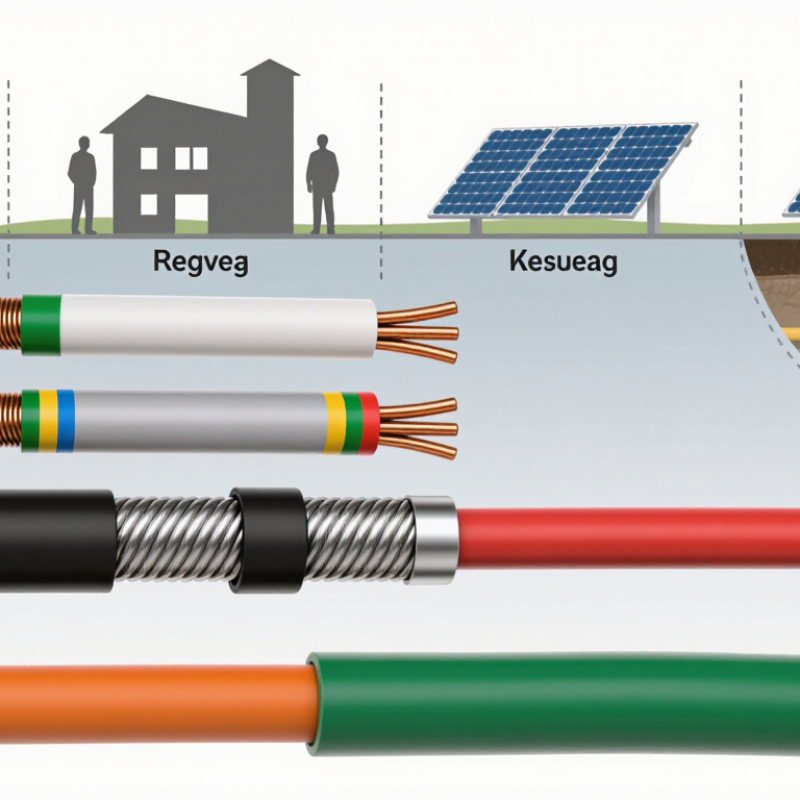
Electrical wire starts with its structure, not its color. A typical cable contains a conductive core, insulation, and sometimes shielding or an outer jacket. Copper offers about 100% IACS conductivity at 20°C, while aluminum provides roughly 61%. This difference affects resistance, weight, and connection design. IEC 60228 classifies conductors by construction and flexibility, from solid cores to finely stranded wires. A compact stranded conductor bends easily, but it may need careful terminal preparation.
Material choice must match the working environment. PVC insulation is economical for general installations, while XLPE tolerates higher continuous temperatures and supports better thermal performance. The International Energy Agency’s Electricity 2024 report expects global electricity demand to grow by more than 2% annually through 2026. That growth increases demand for reliable distribution wiring, especially in industrial and renewable-energy projects. Yet higher demand does not excuse weak specifications. A thicker conductor can reduce voltage drop, but it also increases cost and installation weight.
Performance depends on more than conductor size. Engineers check ampacity, insulation temperature rating, short-circuit withstand, bending radius, flame behavior, and moisture exposure. The IEEE 835 standard provides ampacity calculation guidance, although field conditions can still reduce theoretical capacity. I have seen designs rely too heavily on catalogue ratings. That is a practical mistake. Bundled cables, hot ducts, and poor ventilation change the result. Buyers should request test evidence, material declarations, and traceable compliance records. Small details matter.
What Are the Top Electrical Wire Types for Global Buyers? - Electrical Wire Basics: Structure, Materials, and Performance
| Wire Type | Conductor Structure | Typical Conductor Material | Common Insulation or Sheath | Typical Voltage Range | Typical Temperature Rating | Key Performance Features | Typical Applications |
|---|---|---|---|---|---|---|---|
| Bare Copper Wire | Solid or stranded, uninsulated | Annealed or hard-drawn copper | None; may receive a protective coating | Application-dependent | Application-dependent | Very high conductivity, excellent grounding performance, easy termination | Earthing and bonding systems, overhead conductors, grounding grids, electrical equipment connections |
| PVC-Insulated Building Wire | Solid or stranded single conductor | Copper or aluminum | PVC insulation; optional nylon or PVC outer layer | Typically 300–750 V, depending on the applicable standard | Commonly 70°C or 90°C maximum conductor rating | Cost-effective, flame-retardant grades available, easy to process | Residential and commercial fixed wiring, conduits, distribution boards, lighting circuits |
| THHN/THWN-2 Type Wire | Usually stranded; solid versions are available in smaller sizes | Copper or aluminum | PVC insulation with nylon jacket; THWN-2 versions are moisture-resistant | Commonly 600 V | 90°C dry and, for THWN-2, 90°C wet; final rating depends on certification | Good abrasion resistance, chemical resistance, and conduit-pulling performance | Conduit systems, feeders, branch circuits, industrial and commercial installations |
| XLPE-Insulated Wire | Solid, stranded, or compact stranded conductor | Copper or aluminum | Cross-linked polyethylene insulation; PVC or polyolefin sheath may be added | Low-voltage designs up to 1 kV; medium-voltage designs commonly 3.6/6 kV to 18/30 kV | Typically 90°C continuous conductor rating | Higher thermal capacity than many PVC designs, strong moisture resistance, low dielectric loss | Power distribution, industrial facilities, renewable-energy systems, underground and outdoor installations |
| XHHW-2 Wire | Stranded or compact stranded single conductor | Copper or aluminum | Cross-linked polyethylene insulation | Commonly 600 V | 90°C in dry and wet locations when identified as XHHW-2 | Moisture-resistant, thermally stable, suitable for demanding raceway environments | Industrial feeders, wet locations, underground raceways, switchgear and distribution equipment |
| Flexible Fine-Stranded Cable | Multiple fine copper strands, often arranged in flexible classes | Flexible stranded copper; tinned copper may be used for corrosion resistance | PVC, elastomer, rubber, or thermoplastic insulation | Typically 300–1,000 V, depending on construction and standard | Commonly 70°C to 105°C; higher ratings are available for specialized materials | Excellent flexibility, vibration tolerance, and resistance to repeated bending | Control panels, robotics, machinery, battery connections, portable equipment and moving assemblies |
| Armored Power Cable | Single or multicore stranded conductors with metallic armor | Copper or aluminum | PVC, XLPE, or other rated insulation with steel or aluminum armor | Commonly 600/1,000 V; higher-voltage versions are available | Often 70°C or 90°C, depending on insulation material | Mechanical protection, resistance to impact and compression, suitable for challenging routes | Industrial plants, infrastructure, tunnels, outdoor cable routes and direct-burial systems |
| Mineral-Insulated Copper-Sheathed Cable | Copper conductors separated by compacted mineral insulation | Copper conductors with a copper outer sheath | Compacted magnesium oxide or another mineral insulation | Commonly 300–750 V, depending on design | Can withstand very high temperatures; exact limits depend on construction and termination | Fire resistance, low smoke, non-combustibility, high mechanical strength and compact dimensions | Fire alarms, emergency circuits, industrial heating, high-temperature areas and critical infrastructure |
| Photovoltaic Cable | Fine-stranded flexible conductor, usually single-core | Tinned or bare copper; aluminum designs are less common | Cross-linked polyolefin or other UV-resistant, ozone-resistant insulation and sheath | Commonly 1,000 V DC or 1,500 V DC | Often 90°C continuous; installation and short-circuit ratings vary | UV resistance, outdoor durability, weather resistance and flexibility for solar-array routing | Solar modules, combiner boxes, inverters, rooftop systems and utility-scale photovoltaic installations |
| High-Temperature Silicone Wire | Flexible stranded conductor, sometimes tinned | Copper | Silicone rubber insulation | Commonly 300–600 V | Often approximately −60°C to +180°C, subject to the specific construction | Wide temperature range, excellent flexibility and resistance to thermal aging | Ovens, lighting equipment, heating appliances, motors and high-temperature machinery |
| Buyer selection note: Confirm the required conductor size, voltage class, insulation temperature, wet-location suitability, bending radius, fire performance, environmental exposure, installation method, and certification requirements under the destination market’s applicable electrical standard. Ampacity and permissible operating temperature must be calculated according to the applicable code rather than selected from insulation temperature alone. | |||||||
Related Posts
-
Top 10 Control Cable Types for Optimal Performance in Industrial Applications
-
Why Choose Electric Cable Wire for Global Buyers?
-
2026 Best Control Cable Options for Global Buyers
-
How to Choose the Right 3 Core Cable for Your Electrical Projects?
-
How to Choose the Right Power Wire for Your Electrical Projects?
-
Understanding Multi Conductor Cables: Essential Tips for Effective Electrical Wiring