What Are the Top Marine Cable Types in 2026?

What Are the Top Marine Cable Types in 2026?

What are the top marine cable types in 2026? The answer depends on the vessel, system, and installation. A cable used inside a ship has different demands from one laid on the seabed. Salt spray, vibration, repeated bending, heat, and water pressure all shape the choice. In practice, the right specification matters more than a broad “top” label. This guide compares the main cable families by purpose and operating conditions.

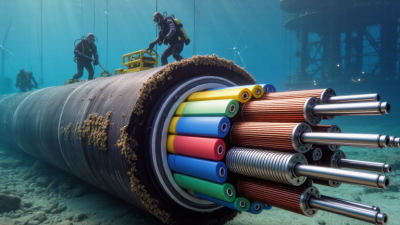
Power cables carry energy to propulsion equipment, shore connections, and offshore installations. Control and instrumentation cables transmit signals between sensors, switchboards, and machinery. Fiber-optic and other communication cables support data links, while coaxial designs serve selected radio-frequency systems. Subsea and dynamic cables are built for demanding routes, including movement near floating platforms. Armor, insulation, conductor material, and jacket design can vary within each family. A port crane’s cable may need repeated flexing; a seabed link may need protection from abrasion and pressure. Small details matter.

Readers should compare voltage, current capacity, bend radius, water resistance, temperature range, and the manufacturer’s datasheet. Check compatibility with the equipment and installation method before treating a type as suitable. No universal winner. Categories can overlap, and product names are not always consistent across suppliers. That makes comparison less tidy than a simple ranked list. The sections ahead explain where each type fits, which trade-offs to examine, and what to ask before specifying or replacing a cable.
What Are the Top Marine Cable Types in 2026?

Marine Cable Fundamentals and Classification

Marine cable is not one universal product; its construction depends on what it carries and where it is installed. Classification often begins with function: power, control, instrumentation, or communications. A power cable may contain one or several conductors, sized for its expected load. Control cables connect equipment and carry switching signals, while fiber-optic cables transmit data using light. Details matter.

Construction is another useful way to compare cables. Conductors are commonly copper, while insulation and outer sheaths are selected for electrical and environmental conditions. A cable exposed to seawater, oil, sunlight, or abrasion needs suitable protective materials. Armoring can add mechanical protection, especially where a cable faces impact or tension, but it also affects weight and flexibility. Flexible designs suit moving equipment; fixed-installation cables may use a stiffer build. Check the voltage rating, temperature range, installation method, and product documentation before selecting a type. The neat categories can blur. A cable may combine power and control conductors, so its full specification matters more than its label. That distinction is not always tidy.

Top Marine Cable Types in 2026: Fundamentals and Classification

Marine power cables are commonly classified by rated voltage. The chart compares representative standardized U₀/U ratings, where U₀ is the rated voltage between a conductor and earth, and U is the rated voltage between conductors.

Typical marine cable families also include low-voltage power, medium-voltage power, control and instrumentation, and communication or fiber-optic cables. Cable construction may be armoured or unarmoured, with insulation and sheath materials selected for the installation environment. The ratings shown are examples; the correct cable depends on system design and applicable standards.

Shipboard and Offshore Power Cable Types

What Are the Top Marine Cable Types in 2026?
Shipboard and Offshore Power Cable Types

Shipboard systems commonly use flexible low-voltage cables for lighting, pumps, and control circuits. Medium-voltage XLPE or EPR cables serve propulsion drives and larger power loads. Fire-resistant and low-smoke cable designs can help maintain essential circuits during emergencies, but selection depends on the vessel’s system and installation conditions. IEC 60092 provides standards for electrical installations on ships. Cable construction should also suit oil exposure, vibration, heat, and tight bends in machinery spaces.

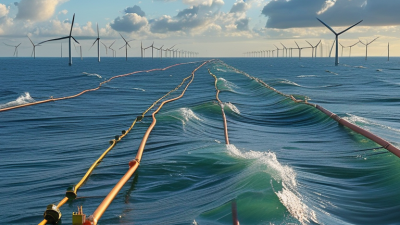
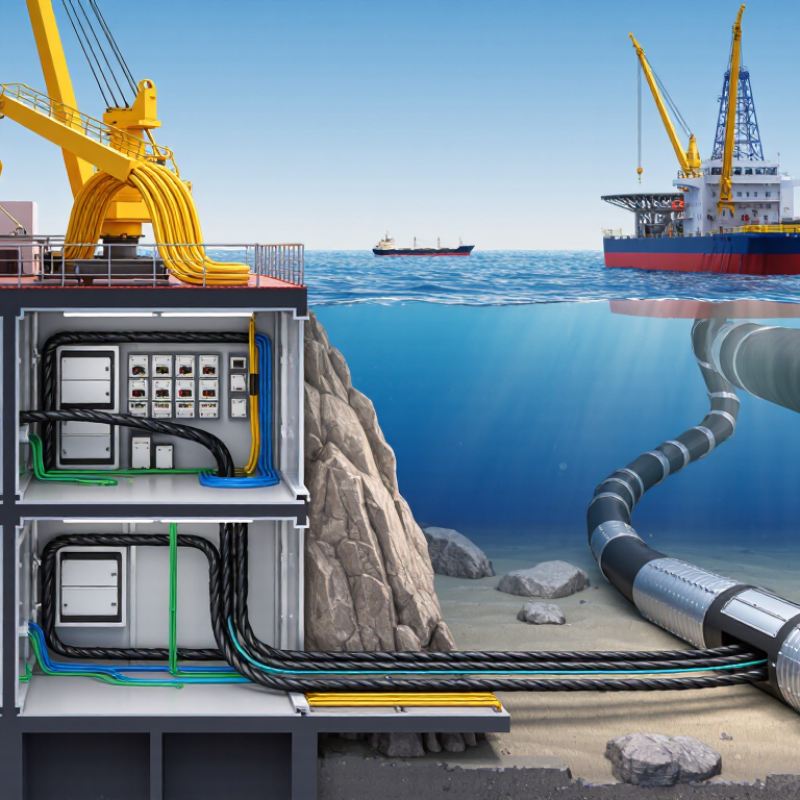
Offshore platforms and wind farms need additional cable types. Inter-array cables connect turbines, while export cables carry power toward shore; dynamic cables may be designed for moving structures. GWEC’s Global Offshore Wind Report 2024 recorded 10.8 GW of new offshore wind installations in 2023, bringing global capacity to 75.2 GW. That growth underscores the need to assess voltage, water depth, movement, and expected service life. Still, a cable type alone cannot guarantee reliability. Connectors, protection, and installation quality matter too.

Tips: Check voltage, conductor size, fire performance, and environmental ratings against the project specification. For offshore units, review the applicable IEC 61892 requirements. Ask for test documentation, and verify bend radius before routing; it is easy to overlook in a crowded cable tray.

Marine Communication and Data Cable Types

What Are the Top Marine Cable Types in 2026?
Marine Communication and Data Cable Types

Marine communication systems commonly use fiber-optic, twisted-pair, coaxial, and serial data cables. Each serves different equipment and distances. Fiber carries high data rates over long runs and resists electromagnetic interference. It can be less forgiving during installation, though. Tight bends may damage the glass fibers.

Twisted-pair cables, including marine-rated Ethernet lines, connect navigation displays, cameras, and onboard networks. Shielding helps limit interference from motors and power cables. Coaxial cable remains useful for radio-frequency signals, while serial cables support some sensors and legacy instruments. Details matter. A cable’s connector, conductor size, and data standard must match the equipment.

Salt spray, vibration, oil, and changing temperatures all affect service life. Look for construction suited to the route, such as water-blocking layers, tinned copper conductors, and a durable outer jacket. Armor may help where cables face abrasion, but it adds weight and can complicate routing. There is no single best type. Even a well-specified cable can fail if connectors are poorly sealed or bends are too sharp, so installation deserves as much attention as the cable schedule.

What Are the Top Marine Cable Types in 2026? — Marine Communication and Data Cable Types

Cable Type Transmission Medium Typical Marine Applications Key Advantages Important Selection Considerations
Shielded twisted-pair Ethernet Pairs of insulated copper conductors, with shielding depending on cable construction and installation needs. Shipboard local-area networks, control-room connections, equipment links, and IP-based monitoring systems. Widely supported, straightforward to terminate, and suitable for many short- and medium-distance network links. Performance depends on the cable category, channel design, and connected equipment. Choose a marine-suitable construction with appropriate resistance to moisture, oil, vibration, and electromagnetic interference. Check the required data rate, link distance, bend radius, and applicable vessel specifications.
Single-mode fiber-optic cable Optical fiber with a small core designed for long-distance signal transmission. Backbones between vessel decks or compartments, high-capacity network links, and connections between vessels and shore infrastructure. Supports high bandwidth over long distances and is not susceptible to electromagnetic interference in the way copper conductors are. Requires compatible optical transceivers, connectors, and careful cleaning and handling. Confirm fiber type, connector format, optical budget, and mechanical protection for the route.
Multimode fiber-optic cable Optical fiber with a larger core, commonly used for shorter optical links. Data-center-style links, equipment rooms, and other short-distance shipboard network connections. Provides optical isolation and can be practical for links where compatible multimode equipment is already installed. Reach and data rate depend on the fiber grade and transceivers. Verify end-to-end compatibility and whether multimode or single-mode fiber best fits the network plan.
Coaxial cable A central conductor surrounded by dielectric insulation and a conductive shield. Radio-frequency systems such as antenna feeds, satellite communications, GNSS, and selected radio or video connections. Well suited to carrying radio-frequency signals and provides shielding around the central conductor. Use the correct impedance and frequency-rated components for the system. Account for insertion loss, connector weather protection, routing, and any lightning or bonding requirements.
Hybrid fiber-copper cable Optical fibers combined with copper conductors in one cable assembly. Remote cameras, sensors, or network devices where data and electrical power need to travel along a shared route. Can combine fiber’s data capacity and electrical isolation with copper power delivery, reducing the need for separate cable runs. Confirm that the copper conductors meet the device’s voltage, current, and voltage-drop requirements. Fiber and power components must both be suitable for the installation environment.
Armored subsea fiber-optic cable Optical fiber protected by cable layers that may include water-blocking materials and metallic or non-metallic armor. Seabed communication links, offshore installations, and connections between fixed marine structures. Designed for demanding underwater routes where mechanical protection and resistance to water ingress are essential. Armor and construction must match water depth, seabed conditions, installation method, and expected external loads. Route design and specialist installation are important.
Marine-rated coaxial or twisted-pair cable assemblies Copper conductors with jacket, shielding, and assembly features selected for the intended onboard environment. Interconnections for navigation, communications, sensors, and other vessel equipment. Pre-terminated or application-specific assemblies can simplify equipment connections and maintenance. Check connector compatibility, ingress protection at connection points, jacket material, flame and smoke requirements, and the equipment manufacturer’s installation guidance.

Selection note: Cable performance depends on the complete link, including cable construction, connectors, installation, and active equipment. For vessel installations, verify environmental, fire-safety, and classification requirements applicable to the vessel and route.

Control, Instrumentation, and Specialty Cable Types

Control, Instrumentation, and Specialty Cable Types

Marine control cables connect panels to pumps, valves, fans, and steering equipment. Their conductors carry commands through engine-room heat, vibration, and occasional contact with oil. Flexible stranding helps cables follow tight routes, while durable jackets resist abrasion near cable trays. Small details matter. A cable that bends poorly can strain its termination over time.

Instrumentation cables carry low-level signals from sensors measuring temperature, pressure, flow, or tank level. Twisted pairs help reduce electrical interference, and individual or overall shields can protect sensitive readings. Shielding is not a cure for poor routing, though. Keep signal cables separated from power circuits where practical, and follow the equipment maker’s grounding instructions. A neat shield connection can still cause noise if installed incorrectly.

Specialty cables serve particular onboard conditions. Fire-resistant designs may help maintain selected circuits during a fire, while thermocouple cables preserve temperature measurements with compatible conductor materials. Data and coaxial cables support communications and monitoring systems. Choose by function, temperature range, chemical exposure, bend radius, and required performance—not by cable name alone. No type fits every route. Even a technically suitable cable can fail early when glands, supports, or terminations are poorly matched. Verify the vessel’s drawings and cable specifications before installation; assumptions are easy to make and harder to correct at sea.

How to Select Marine Cables for 2026 Applications

Choosing marine cables in 2026 starts with the route, not the catalog. A cable running beneath a deck needs different protection from one inside a dry control cabinet. Map exposure to salt spray, oil, sunlight, vibration, heat, and standing water. Not every “marine” cable is designed for continuous immersion.

Match cable type to its job. Power cables carry current to propulsion or auxiliary equipment; control and instrumentation cables serve sensors, alarms, and machinery signals. Shielding can reduce interference near drives and radio equipment. Fiber-optic cable suits data links where electrical noise is a concern. Check voltage, load, conductor size, and allowable temperature rise with a qualified designer.

Small details matter.

Think about installation, too. Tight bends behind a switchboard can strain a stiff cable, while unsupported runs may rub against sharp metal edges. Choose insulation and sheathing for the actual fluids and temperatures, and specify armoring where impact or abrasion is likely. More armor is not always better; it adds weight and can make routing harder. Verify required flame, smoke, and vessel-class criteria for the project, then review test records and manufacturer documentation before purchase. A neat specification helps, but the real route may still surprise you.