


What Is the Best Type of 4 Wire Cable in 2026?
Choosing the best 4 wire cable in 2026 depends less on a product label than on the job it must do. A cable for a three-phase motor, a residential circuit, and an outdoor control system may each contain four conductors, yet differ in conductor size, insulation, shielding, and temperature rating. The fourth conductor is not automatically a ground wire. Check the wiring diagram.
Grid expansion makes these choices increasingly important. The International Energy Agency’s Electricity Grids and Secure Energy Transitions report estimates that more than 80 million kilometers of electricity grids must be added or refurbished by 2040. That is roughly equivalent to the world’s existing grid length. IEC 60228 also defines conductor classes, helping buyers compare solid and stranded conductors by measurable properties rather than appearance alone. Small details matter.
For a fair comparison, this guide weighs copper and aluminum, flexible and rigid construction, insulation type, voltage rating, and installation conditions. A cable routed through a warm conduit faces different demands from one exposed to moisture, vibration, or repeated movement. Check the equipment specifications and applicable local installation requirements before choosing. A heavier cable is not always better; oversizing can add cost and complicate termination. I would not call any single construction “best” without knowing the load, route, and environment. That uncertainty is worth stating plainly. The sections ahead explain which 4 wire cable types suit common applications, what specifications to verify, and where product claims deserve a closer look.
Define Four-Conductor Cable Types by IEC 60228 Classes 1, 2, 5 and 6
What Is the Best Type of 4 Wire Cable in 2026?
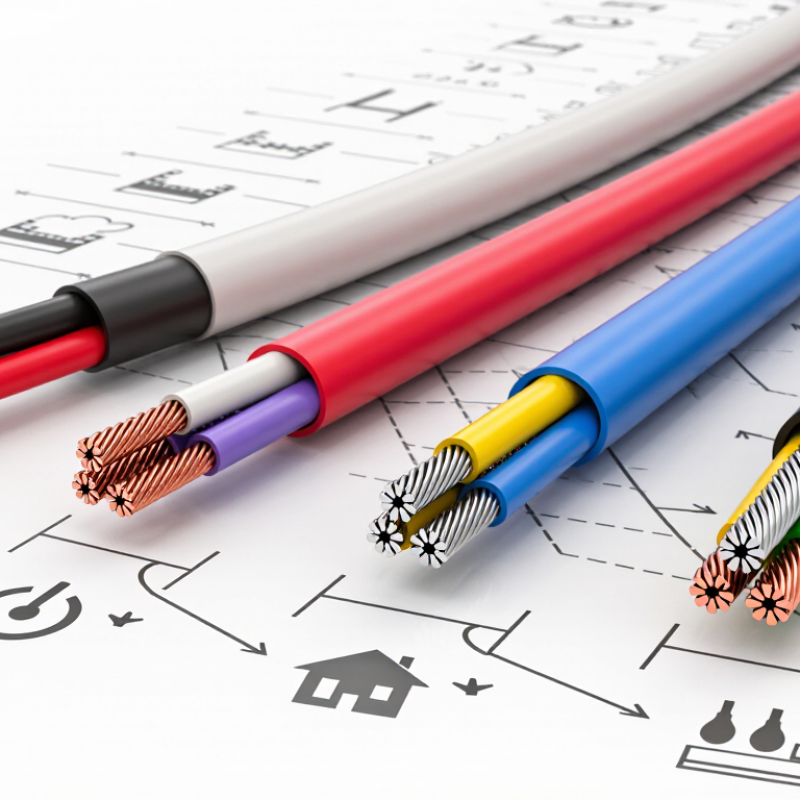
The “four-wire” description counts conductors; it does not specify how each conductor is built. IEC 60228 classifies conductors as Class 1 solid, Class 2 stranded for fixed installations, Class 5 flexible, and Class 6 extra flexible. The class applies to each conductor, not to the number of cores in the cable.
The standard’s resistance tables offer a useful comparison. For a 1.5 mm² copper conductor at 20°C, IEC 60228 sets maximum DC resistance at 12.1 ohms per kilometre for Class 1 and Class 2, and 13.3 ohms per kilometre for Class 5. Check the exact size and class in the applicable table. Class 5 and 6 are suited to repeated movement, while solid and stranded rigid conductors generally suit fixed runs. Short cable runs still need careful termination.
There is no universal best class. A control panel with static wiring may favour Class 2; a moving machine connection may need Class 5 or 6 and compatible terminals. Four cores do not guarantee equal flexibility. Installation space, bending radius, temperature, and current all matter. Charts help. Real routing can be messier. One detail is easy to miss: a finer, more flexible conductor may need different ferrules or lugs, so confirm the cable and terminal specifications together.
| IEC 60228 Conductor Class | Conductor Construction | Flexibility | Typical Four-Conductor Cable Use | Best Fit When | Practical Considerations |
|---|---|---|---|---|---|
| Class 1 Solid conductor |
One solid conductor for each core. | Lowest flexibility; intended for fixed installation. | Fixed wiring in applications where the cable construction and applicable wiring rules permit solid conductors. | The cable will remain stationary and straightforward, rigid routing is acceptable. | Can be harder to route around tight bends. Check the cable product standard, terminal compatibility, and installation requirements. |
| Class 2 Stranded conductor |
A conductor made from multiple wires, with the construction specified by the relevant standard. | More flexible than Class 1, but intended primarily for fixed installation rather than repeated movement. | Common fixed-installation choice for four-core power cables, including suitable cable designs for distribution and equipment connections. | You need a practical balance of handling and fixed-installation suitability. | Often a versatile choice for fixed wiring. Verify conductor size, cable rating, installation method, and that terminals accept the conductor construction. |
| Class 5 Flexible conductor |
Fine-stranded flexible conductor. | High flexibility compared with Classes 1 and 2. | Flexible four-core cables for equipment connections or installations where the cable needs easier routing or occasional movement, subject to the cable’s intended use. | Routing flexibility or connection to equipment is important. | Use compatible terminals and termination methods. A flexible conductor does not, by itself, make a cable suitable for continuous flexing or moving machinery. |
| Class 6 More flexible conductor |
Very fine-stranded conductor; more finely stranded than Class 5. | Very high flexibility. | Specialized flexible four-core cable applications where easier bending or handling is required and the cable design is rated for the actual service conditions. | Maximum conductor flexibility is needed among these four classes. | Confirm compatibility with connectors and terminations. Check the complete cable’s flexing, abrasion, temperature, and environmental ratings rather than relying on conductor class alone. |
| Important: IEC 60228 classifies the conductors within a cable; it does not define the complete cable’s voltage rating, current capacity, insulation, sheath, or suitability for a particular installation. “Four-core” describes the number of insulated conductors, not their IEC class. A four-core cable may be configured for different circuit functions, so confirm the wiring diagram, conductor identification, and applicable local rules before selection. | |||||
Related Posts
-
Top 4 Core Cable Suppliers for Global Buyers?
-
2026 Best 4 Wire Cable Options and How to Choose Them?
-

Best Thermocouple Wire at 2026 Canton Fair How to Choose?
-
Why Choose Marine Cable for Underwater Applications?
-

Where to Find the Best 2 Core Cable Suppliers in China?
-

2025 Top 5 Benefits of 4 Wire Systems for Enhanced Electrical Efficiency