What Are the Top Types of Armoured Cable?

What Are the Top Types of Armoured Cable?

Armoured cable is often chosen for one reason: the route may expose it to impact, pressure, or demanding site conditions. But “armoured” does not describe one universal construction. Steel wire armour, steel tape armour, and aluminium wire armour each suit different mechanical, electrical, and installation needs. The right choice depends on the cable’s location, load, environment, and termination method. Small details matter. A sharp bend near a gland can undermine an otherwise sound installation.

The International Energy Agency’s Electricity Grids and Secure Energy Transitions report says more than 80 million kilometres of electricity grids must be added or refurbished by 2040 in its net-zero pathway. That projection concerns grid infrastructure broadly, not armoured cable alone. It nevertheless shows why dependable cable selection matters. IEC 60502-1 provides requirements for certain power cables, while IEC 60228 addresses conductor classes. These standards help frame technical comparisons; they do not replace project-specific engineering review.

This guide compares the leading armoured cable types, their construction, and common applications. It also considers corrosion exposure, pulling forces, and whether metallic armour can serve as a protective conductor. One limitation: no source material was supplied to verify a named expert’s exact words. Rather than invent a quotation, this introduction leaves one out. That restraint matters. Cable specifications deserve evidence, not polished guesswork.
What Are the Top Types of Armoured Cable?

Armoured Cable Basics: Layers, Materials and Mechanical Protection

What Are the Top Types of Armoured Cable?

Armoured cable is built in layers, each with a specific task. A copper or aluminium conductor carries current, while insulation separates it from other conductors. A bedding layer cushions the core and provides a surface for the armour. The outer sheath helps resist moisture, abrasion, and contact with soil or building materials. Details matter.

Armour may use steel wire, steel tape, or aluminium, depending on the cable design and installation needs. Steel wire is commonly used where stronger mechanical protection is needed. Aluminium armour can be useful when reducing weight or avoiding magnetic effects matters. The bedding beneath the armour is important, too; without a suitable cushion, installation pressure can damage inner layers. Small differences count.

Mechanical protection helps guard against knocks, crushing, and accidental contact during installation. It does not make a cable indestructible or automatically waterproof. The outer sheath and cable construction must suit the actual environment, such as a damp service trench or a busy plant room. It is tempting to treat thicker armour as automatically safer, but that is not always right. Cable selection should consider load, routing, exposure, and the relevant technical requirements. A close look at the full layer structure often reveals more than the armour type alone.

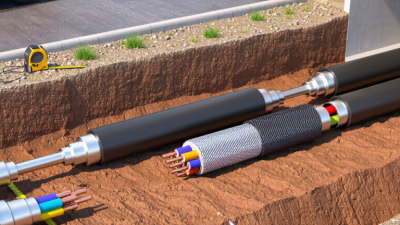
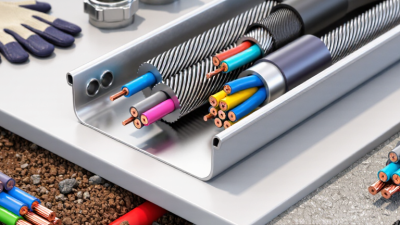
Typical metallic armor layers by construction. Steel wire armoured (SWA) and aluminium wire armoured (AWA) cables typically use one layer of armor wires; double steel tape armoured cables use two tape layers. Armor construction varies by cable design and applicable standard. Layer count alone does not indicate overall mechanical protection.

SWA Cable: Steel Wire Armour for Multicore Power Circuits

Steel wire armoured cable, or SWA, is designed for multicore power circuits where conductors need added mechanical protection. Its steel wires sit beneath an outer sheath, helping resist impact and crushing during installation. They do not make the cable immune to damage. Careful routing and suitable glands still matter.

IEC 60502-1:2021 covers power cables rated at 1 kV (Um 1.2 kV) and 3 kV (Um 3.6 kV). These figures define voltage classes, not a safe current for every cable. Current capacity depends on conductor size, installation method, ambient temperature, and grouping. A cable buried in warm soil may behave differently from one fixed openly on a wall.

The IEA’s 2023 report, Electricity Grids and Secure Energy Transitions, estimates that more than 80 million kilometres of grids must be added or refurbished by 2040. That is grid-scale context, not a cable-selection rule. In practice, check the circuit load, voltage drop, and installation conditions before specifying SWA. I would not rely on the armour alone; that is an easy detail to miss.

AWA Cable: Aluminium Wire Armour for Single-Core AC Cables

AWA Cable: Aluminium Wire Armour for Single-Core AC Cables

Aluminium wire armour is commonly selected for single-core AC cables because aluminium is non-magnetic. Steel armour can experience induced losses around an alternating-current conductor, creating extra heat. AWA helps limit that magnetic effect while providing mechanical protection against knocks and crushing. It is not a cure-all; cable spacing, cleats, and installation conditions still matter.

The International Aluminium Institute reports aluminium’s density at about 2.7 g/cm³, compared with copper’s roughly 8.96 g/cm³. That lower weight can make large cable runs easier to handle. Aluminium’s electrical conductivity is about 61% of copper’s by volume, so conductor sizing must account for the required current and voltage drop. The armour itself is not the current-carrying conductor.

IEC 60287 provides calculation methods for cable current ratings and losses, including losses in metallic layers. Designers should check the cable construction and installation against those calculations, rather than assume every AWA cable performs alike. Glands also need to suit the armour material and cable dimensions. Small details matter. Corrosion compatibility can be overlooked, especially where dissimilar metals meet. AWA offers a practical balance, but the right choice depends on the full cable system.

STA and Tape-Armoured Cables: Flat Steel Protection in Practice

STA and Tape-Armoured Cables: Flat Steel Protection in Practice

STA, or steel-tape armour, wraps a cable core with overlapping flat steel strips. The layers provide mechanical protection against crushing and incidental knocks during installation or service. That flat profile suits many fixed installations, including buried runs, when the cable design and site conditions match. It is not a substitute for careful handling. Tape armour generally offers less resistance to pulling tension than steel-wire armour. Not a cure-all. Tight bends or rough pulling can deform the armour or damage the sheath, so installers should follow the cable’s stated bend radius and pulling limits.

IEC 60502-1:2021 covers extruded-insulation power cables rated 1 kV and 3 kV. Its construction and test requirements provide a useful technical reference when comparing cable specifications; they do not mean every cable in those voltage classes has the same armour performance. Check the declared armour material, dimensions, sheath, and installation conditions on the product datasheet. The armour may also need suitable bonding and termination for the installation. I would not choose STA on the word “armoured” alone: flat steel helps resist radial damage, but it does not remove risks from water ingress, poor joints, or excessive pulling force.

What Are the Top Types of Armoured Cable? — STA and Tape-Armoured Cables: Flat Steel Protection in Practice

Cable Type Armour Construction Typical Uses Key Protection and Limitations Installation Considerations
STA / steel tape-armoured cable Steel tapes are applied around the cable core assembly, generally beneath an outer sheath. “STA” means steel tape armour, so it is commonly another name for tape-armoured cable. Fixed installations where a cable specification calls for mechanical protection, including some buried or industrial cable installations. The steel tape provides mechanical protection, but it does not by itself make a cable waterproof or suitable for every soil, impact, or corrosion condition. Check the cable’s stated installation method, sheath material, burial requirements, and applicable local regulations. Use suitable glands and termination methods.
SWA / steel wire-armoured cable Steel wires surround the cable core assembly beneath the outer sheath. Many fixed multicore power installations, including applications requiring robust mechanical protection. Wire armour can provide mechanical protection and may serve as a protective conductor when the cable design and installation rules permit it. Confirm the armour’s electrical continuity and bonding arrangements. Select glands and accessories that match the cable construction and environment.
AWA / aluminium wire-armoured cable Aluminium wires form the armour layer. Commonly specified for single-core AC power cables where magnetic effects from steel armour are a concern. Aluminium is non-magnetic, unlike ordinary steel. The cable still needs a suitable outer sheath and correctly designed terminations. Follow the cable manufacturer’s installation instructions and electrical design requirements, including bonding and fault-current considerations.
Steel tape versus steel wire armour Tape armour uses flat steel strips; wire armour uses separate steel wires. Exact layer arrangements depend on the cable design. The choice depends on the required mechanical protection, cable construction, installation environment, and project specification. Neither construction has one universal protection rating. Performance depends on the complete cable, including its core insulation, bedding, armour, and outer sheath. Compare the cable’s declared standards and test data rather than relying on the armour abbreviation alone.
Armour as an electrical protective path Some armoured cable designs allow the armour to contribute to the protective conductor path when installed with approved accessories. Electrical installations where armour bonding is included in the protective-earthing design. Do not assume every armour layer is an adequate or permitted earth path; continuity and fault protection must be verified for the specific installation. Check applicable electrical codes, cable data, gland compatibility, and the calculated fault-current and disconnection requirements.

Note: STA refers to steel tape armour; “tape-armoured cable” is generally a descriptive term for a cable using tape armour, not a separate universal cable category. Construction, ratings, and permitted uses vary by cable standard and product specification.

Voltage Classes: IEC 60502-1 Covers 0.6/1 kV Cable Systems

Armoured cable type and voltage class answer different questions. Steel wire armour (SWA) is commonly chosen where cables need mechanical protection, while steel tape armour may suit other installation conditions. The armour does not determine the cable’s voltage rating. That rating must match the electrical system and installation design.

For a 0.6/1 kV system, 0.6 kV is the rated voltage between conductor and earth, and 1 kV is the rated voltage between conductors. IEC 60502-1:2021 specifies cables in this class, as well as 1.8/3 kV cables. It gives designers a recognized technical reference for construction and testing requirements. A useful distinction. The standard’s voltage class is not a substitute for checking current capacity, fault protection, or installation conditions. I would verify the exact cable marking and system voltage; schedules can be unclear.

Tip: Check the full U₀/U rating on the cable datasheet, then confirm the armour material, conductor size, and installation method. Do not select by “armoured” alone.